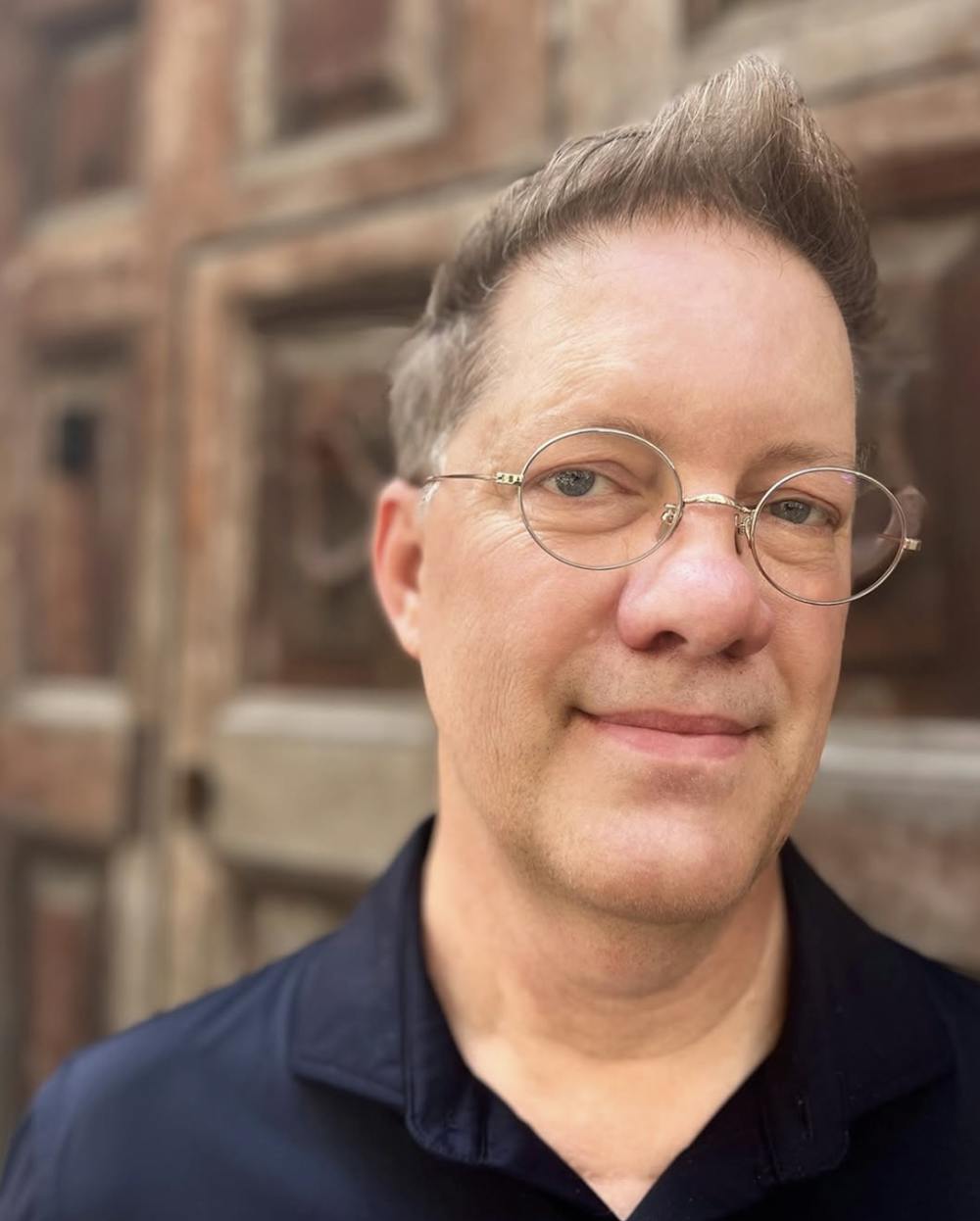
South Arts announced its 2026 State Fellows for the annual Southern Prize and State Fellowships for Visual Arts program on July 23. The Alabama Fellow for Visual Arts is Jeff Schmuki, who is based out of Auburn, Alabama.
South Arts is a nonprofit, regional arts organization focused on supporting artists and communities. By partnering with the National Endowment for the Arts and the state art agencies of nine southern states, including Alabama, South Arts provides grants, fellowships and programs to support artists.
The Southern Prize and State Fellowships for Visual Arts awards nine visual artists $5,000 State Fellowships. Fellows will compete for the Southern Prize, which includes a residency at the Hambidge Center and an additional $25,000. The runner-up will receive $10,000. All nine artists’ works will be displayed at the Western Carolina Fine Art Museum in Cullowhee, North Carolina.
Alabama's fellow, Schmuki, creates art with an ecological foundation. Many of his supplies, including clay, are sourced from his backyard in Auburn. Through his art, he hopes to encourage viewers to think about humans' impact on the environment.
“As a kid, I was always outside making things, tearing things apart, getting in trouble by doing those things,” Schmuki said. “I’ve always liked to make things with my hands, and so, I started as a kid, and then you know, I had teachers and professors who encouraged me, and they gave me the opportunity to make what I wanted to make and step out of my way, which was important, because we all have our ideas.”
Schmuki is well versed with awards, grants and residencies for his art. He has participated in residencies across the world, including South Korea, Iceland and Italy.
Although Schmuki describes ceramics as his favorite medium of art, he has worked with various materials. Schmuki and fellow artist Wendy DesChen created one of his most popular projects, PlantBot Genetics. The collaborative project uses robot-plant hybrids to provide a satirical commentary on agricultural biotech corporations.
South Arts chose five of Schmuki’s ceramic pieces, "Extractive Figures," for this fellowship. The pieces are made using clay found in Schmuki’s own backyard and mine tailings, which are leftover waste materials from mining metals. The mine tailings are used to create a coral-like surface.
“I started making these landscapes that incorporate little figurines, like the kind you get at Goodwill or your grandma has,” Schmuki said. “I'm also interested in the line between something that is pretty and something that's ugly. The figures become monsters; a lot of them have monster heads on them. They're profiteers. They're reaping the benefits of the land, and what about the history of that land? Maybe there's people who were there before us, who never got the benefit of it, or they can no longer enjoy it because it's damaged.”
Using the porcelain figurines and clay to create references to man-made structures, Schmuki creates a landscape. He places the figurines in a kiln and uses heat until the figurines match his vision.
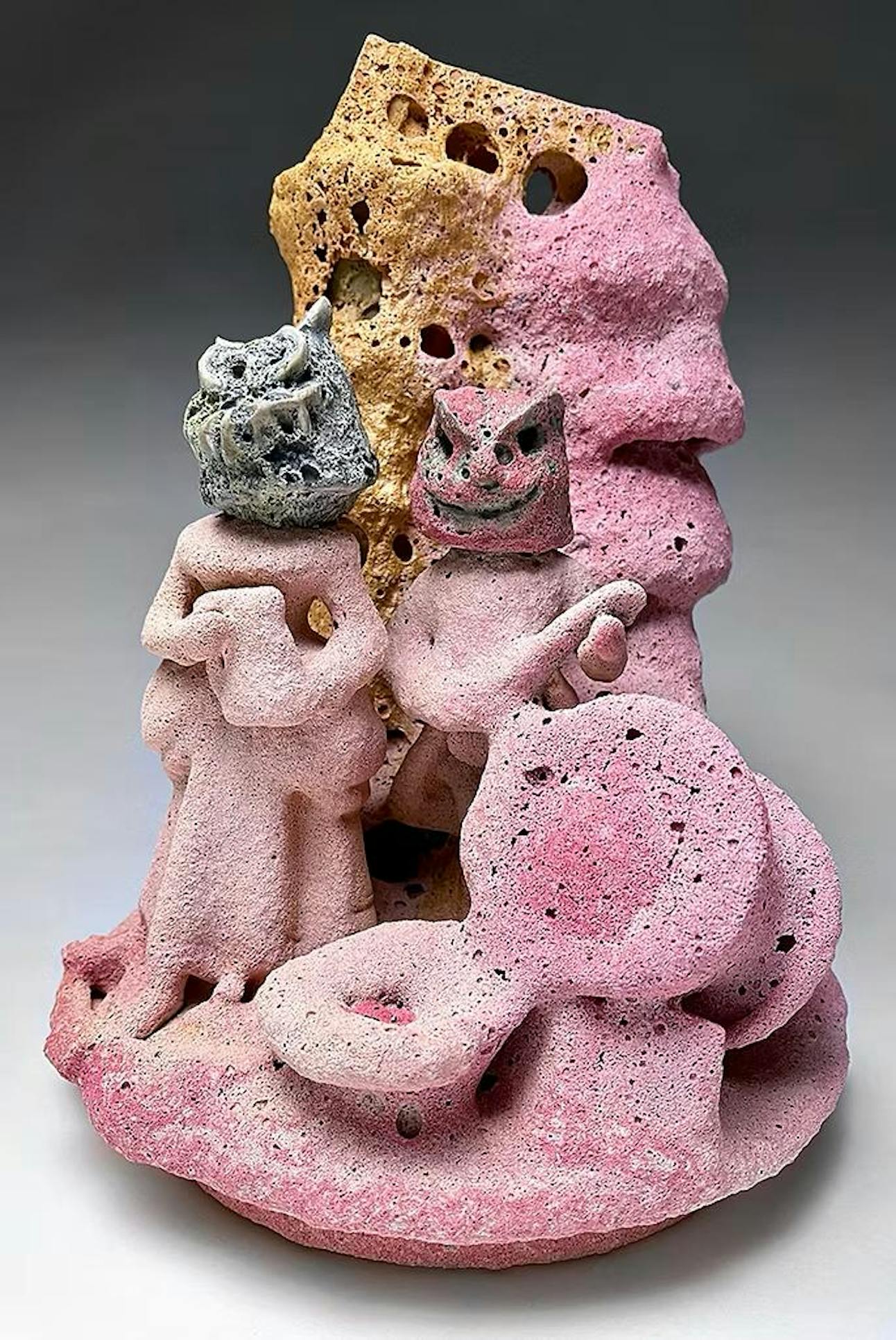
Jeff Schmuki's ceramic piece "Candyland"
“They’re [the art] all basically about these witnesses, the figurines or witnesses, and participants to the unraveling of our environment,” Schmuki said. “That’s the baseline to what my work is about.”
Schmuki, a survivor of Hurricane Katrina, experienced first hand what the unraveling of an environment can do to a community. When Hurricane Katrina made landfall in 2005, Schmuki was living in Gulfport, Mississippi.
“I remember being told Katrina didn’t hit Mississippi,” Schmuki said. “All my neighbors [were] living in what remained of their houses, and some were going hungry and some didn’t survive.”
After Katrina, Schmuki traveled across the country visiting professorships and residencies to support himself and his art career. Those residencies were competitive, often leaving Schmuki unsure of whether or not he would have somewhere to stay.
It was one of those residencies that led him to Auburn. When he met DesChene, his now-wife, they began to collaborate on artistic projects, including PlantBot Genetics. As they grew closer, DesChene, a professor of studio art at Auburn University, helped Schmuki get a position as a lectures coordinator with the university. Although his position at Auburn University ended in 2010, he still resides in Alabama.
“Now I teach at Georgia Southern, in Statesboro, Georgia, but Alabama's my home,” Schmuki said. “My studio is here, and so most of my time has been spent in Alabama, because I want to be with Wendy. I want to be with my family, and I want to make art. I feel this is my home now, ever since I started that first teaching experience, that made it my home. Auburn was my home.”
For his students and any practicing artists, Schmuki provided some advice that he has learned over his extensive career.
“Trust yourself, you know?” Schmuki said. “Give yourself time and space to trust yourself because only you can make that work. No one else can make that work — only you. Don't be afraid to make a lot of bad things in order to get to the thing that only you can make.”
Schmuki’s work will be featured in a traveling group exhibit from Aug. 11 to Oct. 23 at Western Carolina Fine Arts Institute, before moving to additional locations at a later date.
Do you like this story? The Plainsman doesn't accept money from tuition or student fees, and we don't charge a subscription fee. But you can donate to support The Plainsman.
Layla Hyatt, junior in journalism and public and professional writing, has been with The Auburn Plainsman since Fall 2025. Hyatt previously served as a Lifestyle Writer and Assistant Lifestyle Editor. She is currently serving as the Lifestyle Editor.