A Voice Takes Shape
More than 130 years of Auburn history began with a rivalry. The Wirts and Websterians, two literary societies devoted to debate and oratory, set aside their competition in 1893 to create the University’s first student newspaper. They dubbed it Orange and Blue after the football team's colors, launching a publication that would eventually become a living chronicle of campus life, student voices and the evolving story of Auburn University.
Volume 1, Issue 1
On Nov. 17, 1894, the inaugural article was published, covering the football team’s 20-4 loss to Vanderbilt. The black-and-white print opened with a bold front-page headline: “Our Defeat: The First Game of the Season Lost.”
The Plainsman Progresses
Orange and Blue began as a small, biweekly paper before reorganizing into The Plainsman in 1922, adopting a modern journalistic style and increasing publication frequency by 1928. Its coverage moved beyond athletics to policy (“Anti-Prohibition Forces Win Fight in Senate 63-23,” Feb. 18, 1933), campus developments (“Chem. Building Be First Built With New Funds,” Feb. 10, 1929) and contemporary issues.
During the Great Depression, The Plainsman documented economic strain by covering budget cuts and campus unrest. Editorials criticized Alabama’s indifference toward education amid school closures (“Less Prosperous Condition of South Hit By Dr. Johns,” Nov. 18, 1932).
World War II transformed the paper into a platform for wartime updates and student guidance, reporting on global events (“D-Day Landings Greatest World Has Ever Known,” June 9, 1944), assisting with draft registration (“Students to Report on Draft Status,” Dec. 12, 1941) and elevating women into leadership roles, including Shirley Smith ’44 as the first female editor-in-chief.
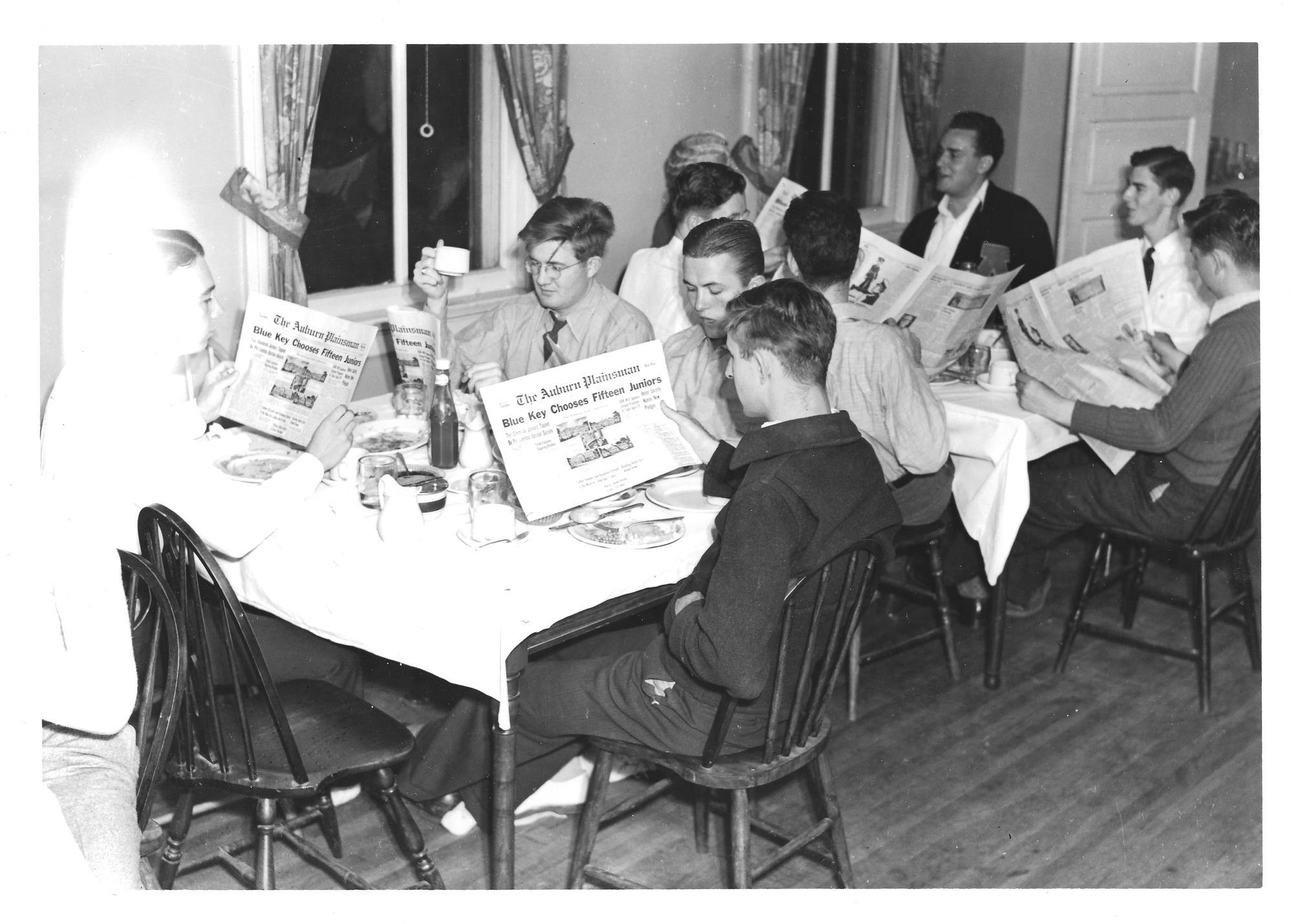
Students gather to read a 1950 to 1970 copy of The Plainsman.
A Shifting South: Through The Plainsman's Eyes
The Plainsman made progressive strides by covering racial injustices that much of the contemporary media avoided. In 1957, a column by Anne Rivers ’58 criticizing segregation was censured by university officials, signifying administrative resistance to such coverage.
Despite the administration's efforts to suppress it, The Plainsman continued to give voice to student expression. In his editorial, “Cluttered Heart Cries for Expression on Issues” (May 9, 1962), Jim Dinsmore ’64 wrote, “It is coming. Auburn will be integrated in the near future; and while the act of integration will hurt us momentarily, the final outcome will mean a better America.”
In the '70s, Auburn wrestled with gender equality. Some of The Plainsman championed it — one cartoon proclaimed “Big Red believes in equal rights for women” (Oct. 16, 1970), while interviews with state officials suggested opposition to such advancements (“Trustee Red Bamberg thinks Auburn ‘as big as it needs to be,’” Jan. 11, 1973).
The Plainsman continued confronting controversy throughout the '80s and '90s. State funding cuts upended Auburn’s administration (“Proration likely for new budget,” Oct. 9, 1980), pushing President Hanley Funderburk into fiscal constraints and eventual resignation (“Magnolia dorm denied funding,” Oct. 23, 1980; “Funderburk gives up fight, resigns post,” March 3, 1938). By the early 1990s, the end of the Kappa Alpha “Old South” parade stirred both praise and criticism (“Parade Shows Dark Side,” Feb. 11, 1993), as emerging technology introduced new academic challenges (“Computer leads to course test answers,” July 19, 1990).
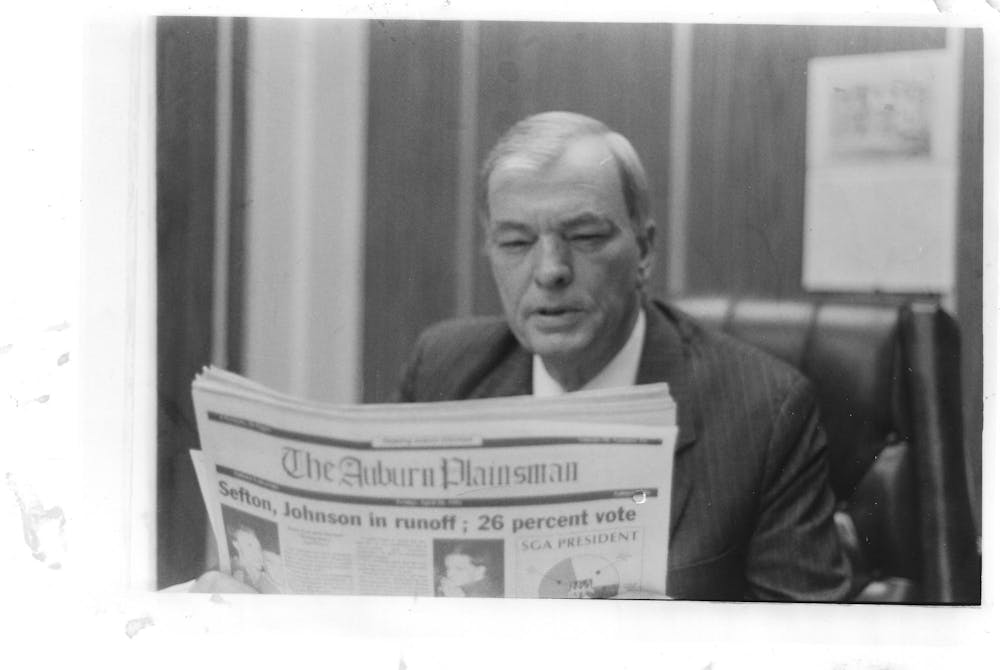
By the late '90s, The Plainsman had become a central directory of Auburn life (“The Plainsman—where everybody knows your name,” May 8, 1997). In '97, it launched online for the first time. As the 2000s and 2010s progressed, national news, such as the 9/11 attacks (“Blasts felt close to home; Auburn looks to help,” Sept. 13, 2001), and more local crises (“Toomer’s Oaks Poisoned,” Feb. 17, 2011) continued to be covered.
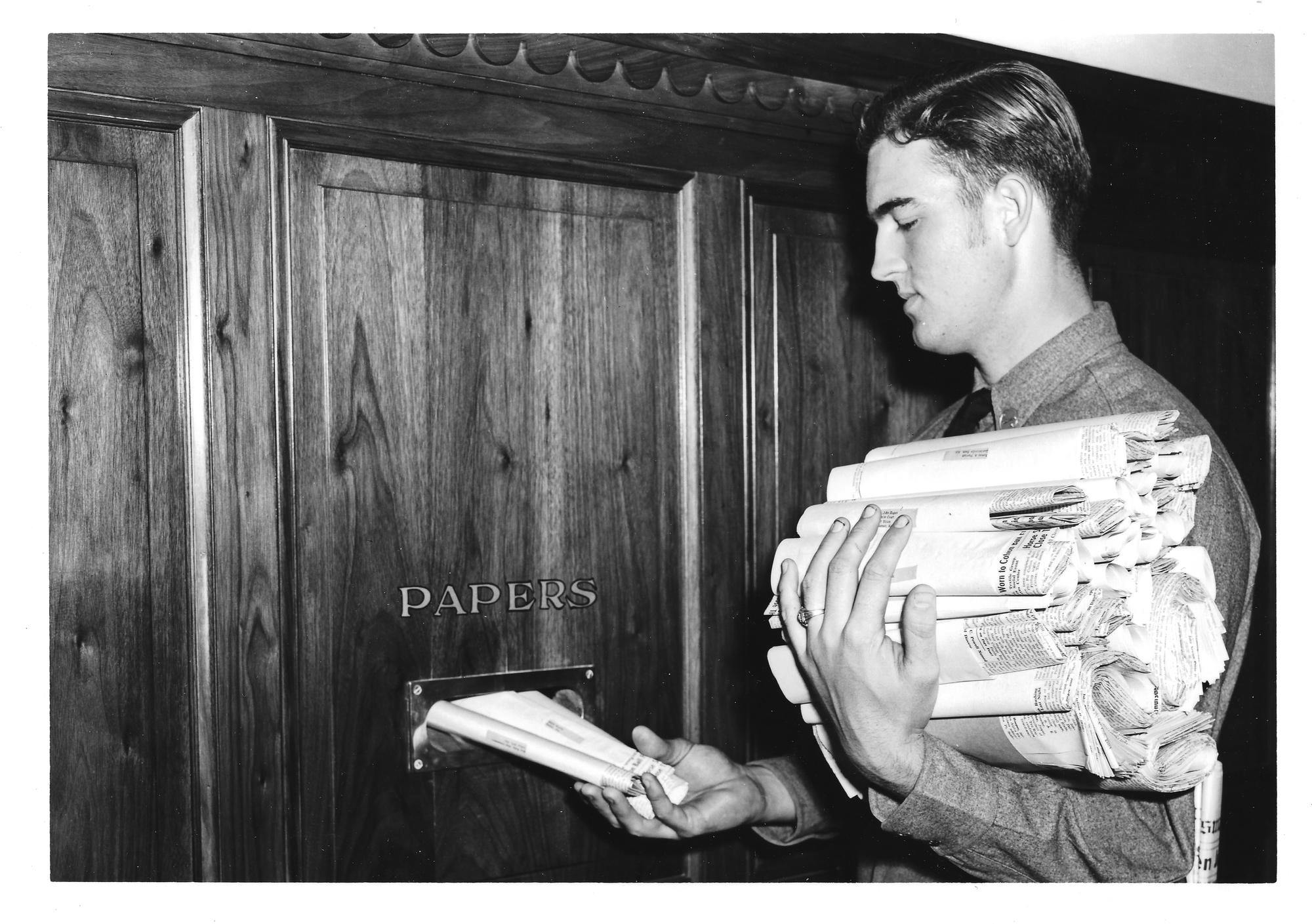
Plainsman staff student delivering papers.
2020s
COVID-19 reshaped life at Auburn. The Plainsman published weekly infection reports and hard-hitting editorials, as well as a series titled "Auburn Voices from the Pandemic," highlighting how the pandemic affected students, faculty and staff across campus.
In 2021, after 127 years, The Plainsman published its final weekly print edition, transitioning primarily to an online format. Editor-in-Chief Jack West noted in his Feb. 14 column that rising costs and the shift toward digital journalism drove the decision. This advancement, while sentimental, was met with a reluctant acceptance: “Going online is a difficult decision but the right one.”
The Plainsman Today
For The Plainsman, 2025 was another year of fearless reporting, unflinching analysis and bold engagement with the issues that mattered most. Reporters detailed administrative controversies, editorials called for accountability and letters to the editor highlighted concerns over censorship of race-related literature in Alabama schools.
More than a century later, The Plainsman continues to give a voice to the campus community–furthering the mission it was founded to carry out on that November day in 1893.
Do you like this story? The Plainsman doesn't accept money from tuition or student fees, and we don't charge a subscription fee. But you can donate to support The Plainsman.