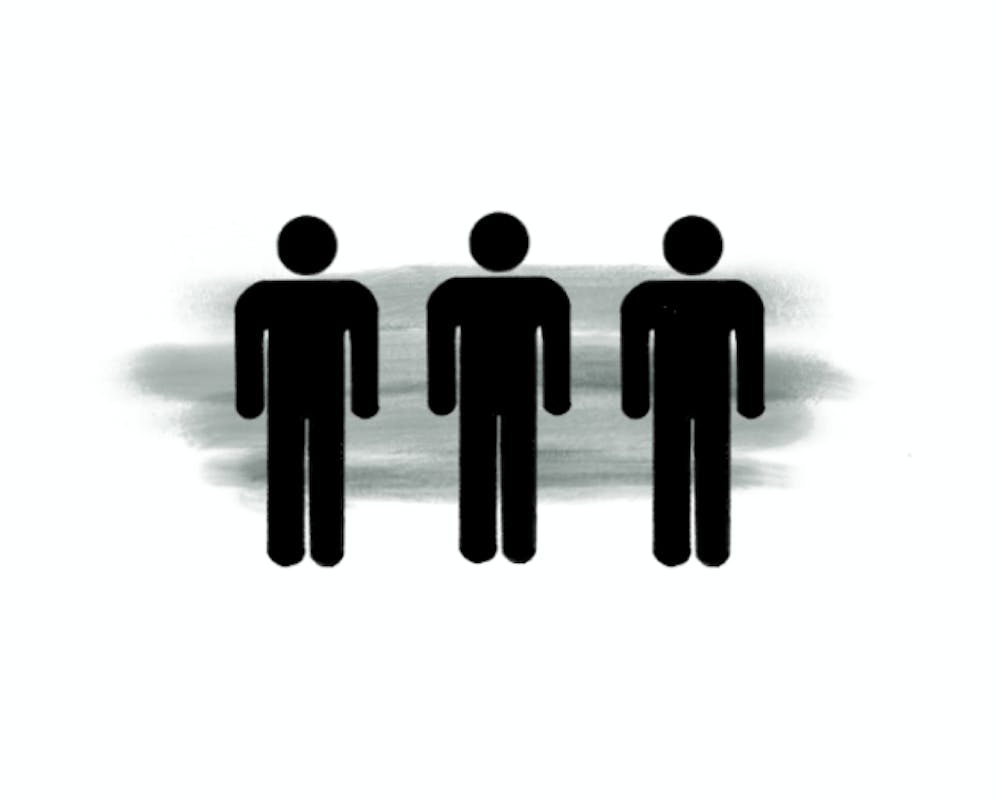
Mankind’s greatest atrocities have arisen in large part from abstraction, from hiding humanity behind lifeless ideas. We are tribal animals, and we have been since the beginning.
As far back as 10,000 years ago, groups of hunter-gatherers massacred one another over territory and food. Human skeletons dated to the Stone Age show signs of extreme blunt-force trauma — bashed-in skulls, crushed bones, arrow piercings. Not just men, but women and children, too, killed for what appears to be the simple crime of trespassing.
At the time, there was no written language to explain such brutality, but the reasoning behind it is clear enough. Native tribes did not view trespassers as fellow humans; they viewed them as threats. And when they resorted to murder, they were not murdering mothers, fathers and children. They were neutralizing those threats.
As civilization evolved, humanity turned its focus toward intellectual and technological advancement, yet our tribalism persisted. The Ancient Greeks, fathers of modern science and philosophy, called non-Greeks barbaroi (precursor to “barbarian” in modern English) as a way of mocking their spoken language, which to Greeks sounded like gibberish (“bar-bar-bar”).
Dehumanizing labels like this are found throughout modern history.
The Declaration of Independence refers to Native Americans as “merciless Indian savages," laying the groundwork for American expansionism, which persisted well beyond the Civil War.
Dust Bowl migrants were denounced as “Okies” and “Reds” and forced to work for pennies living in squatter camps, which were often overrun and burned down by locals.
In post-revolutionary Russia, Lenin and Stalin invoked ties to the “bourgeois” ruling class — real or fictitious — to justify mass arrests, deportations and executions.
The list goes on.
Perhaps most harrowing is Hitler’s distortion of the Jewish identity, among others, which left a continent acquiescent to genocide.
All this is to say that, though nearly everyone is opposed to violence on the individual level, our conscience needs only a little push to tolerate and even approve of terrible things. With the advent of mass media, which enables the rapid dissemination of ideas and propaganda, the potential for widespread hate is at an all-time high.
Such hate is abundant in American politics, and it all boils down to treating people as concepts.
The right is reverting to McCarthyism, condemning the Democrats as a bunch of far-left commies who want to overthrow the government and destroy the country.
The left shouts "Fascist!" at anyone who raises a conservative talking point.
Furthermore, since both sides hate the qualities they criticize in people, they begin to hate the people they criticize.
This is why conservatives went to X to defend and occassionally celebrate the death of Alex Pretti. It’s why progressives rationalized Charlie Kirk’s assassination with a simple, "He had it coming.”
They're so intoxicated by the death of an idea that they’re willing to ignore the death of the person who represented it.
It’s this behavior that enabled horrors like slavery, world wars and the Holocaust. When S.S. agents released deadly gas into chambers filled with oblivious prisoners, they didn’t see a room of individuals, each infinitely complex, overflowing with life. They saw an amorphous mass, one part of the conceptual “Jew” they sought to eradicate.
People are not concepts. Immigrants are more than their naturalization status. Police officers have lives beyond their badges.
An individual’s character is not governed by their politics. Liberal doctors treat whoever shows up at the hospital, MAGA hat or not. Conservative firemen are undeterred by the sight of a "Harris-Walz" sign flying from a burning building.
In other words, when it comes to life or death, our first instinct is to help, not interrogate. And this is when we’re at our best.
As humans, we can barely manage our day-to-day lives, yet we think we know what’s best for the world.
This is not to say we shouldn’t consider big issues, nor advocate for the betterment of humanity. But we must also remember that we are fallible, and that most of us want what’s best, even if we have different ideas of how to get there.
Behind these ideas are a teacher who wants a good future for her students, a father who wants a safe world for his daughter, a person who wants to be accepted as they are.
At the heart of every issue, there are people. Before we make any decisions, before we come to any conclusions, we must acknowledge this fact.
Do you like this story? The Plainsman doesn't accept money from tuition or student fees, and we don't charge a subscription fee. But you can donate to support The Plainsman.