Auburn University’s Greek life involvement continues to be an ever-present tradition on campus and in the Auburn community. Spring, summer and fall formal recruitment are options for potential new members to join sororities and fraternities every school year. Over 35% of Auburn students are involved in Greek life organizations, participating in events to enhance the Auburn community with philanthropic and social endeavors.
Greek life at Auburn has transformed significantly since its establishment in the late 19th century. Initially, Greek membership at Auburn was exclusively open to men, with the first fraternity chapters including Sigma Alpha Epsilon, Alpha Tau Omega and Phi Delta Theta in the late 1870s. Decades later, the first sororities including Chi Omega and Kappa Delta were introduced to the campus community. Now, in 2026, Pi Kappa Phi is celebrating its 100th anniversary on campus.
In the beginning, Greek membership represented a smaller portion of the student body, and recruitment involved far fewer participants than today. Over time, Greek life has become a platform for student engagement, leadership and service, with consistent increases in interest and participation. Panhellenic recruitment has also transformed into a highly structured experience, as the classes of new members have been at all-time highs for the last several years.
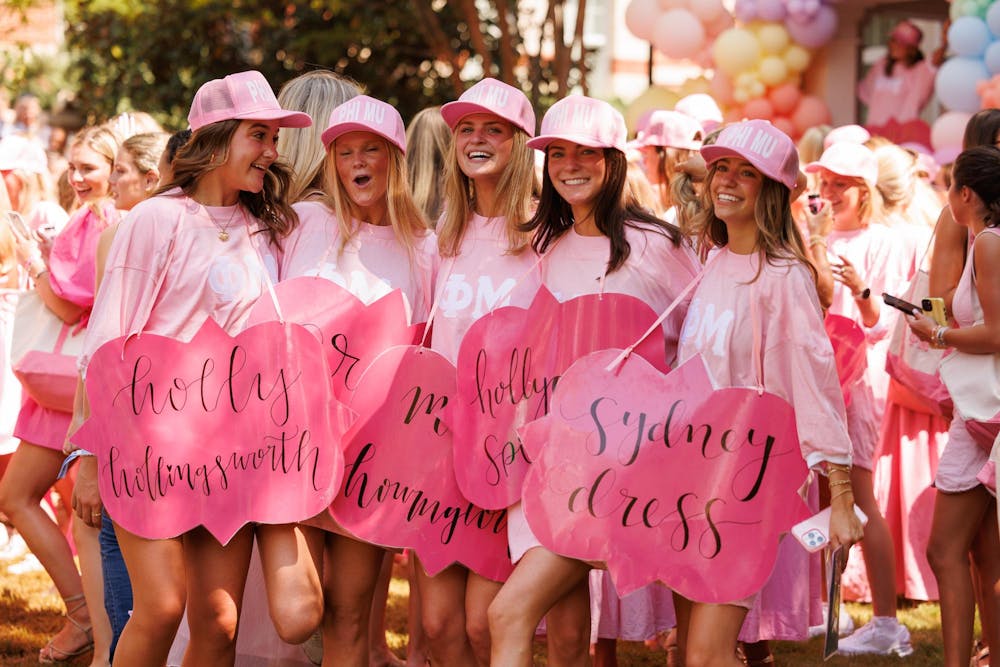
The 2025 Panhellenic recruitment season was once again a record-breaking year, with historic numbers of over 2,500 potential new members (PNMs) participating in formal recruitment, more commonly known as 'rush.' With 18 sororities, the Panhellenic council works to provide positive experiences when PNMs step foot on campus for rush before the fall semester starts.
“It was crazy how many PNMs there were this past year. Every incoming freshman I talk to is planning on rushing, even if they are from out of state,” said Mary Prescott, a sophomore involved in Greek life.
In 2009, all Auburn Panhellenic sororities moved to the university housing known as the Village, increasing member participation and organization recognition. Each chapter has a specific area in the Village, and now, sorority members can choose to live in their sorority's respective building, usually when they are a sophomore.
“I am so grateful to be able to live in my sorority hall with others, and our open-door policy is so much fun. The entire hall lets others share their spaces and so we really get to know each other and bond throughout the year,” said Hadley Moore, a sophomore involved in her sorority.
Along with the Panhellenic sororities, Auburn’s fraternity life on campus provides social opportunities for their members. In the spring and summer, PNMs interested in joining one of the 28 fraternities on campus will communicate with older brothers to find the best fit for their potential Greek community.
Also on Auburn's campus, the National Pan-Hellenic Council (NPHC) is home to the Divine Nine, the historically Black fraternities and sororities. For those interested in joining the Divine Nine, all chapters host a Meet the Greeks event early each semester, while each has its own unique recruitment events during the year.
While Greek life continues to expand at Auburn, the organizations welcome members, even those not involved in Greek organizations, to participate in events hosted by chapters. This inclusivity is unique to Auburn, with the Greek community fostering opportunities for fellowship throughout the year and continuing to evolve on campus.
Do you like this story? The Plainsman doesn't accept money from tuition or student fees, and we don't charge a subscription fee. But you can donate to support The Plainsman.