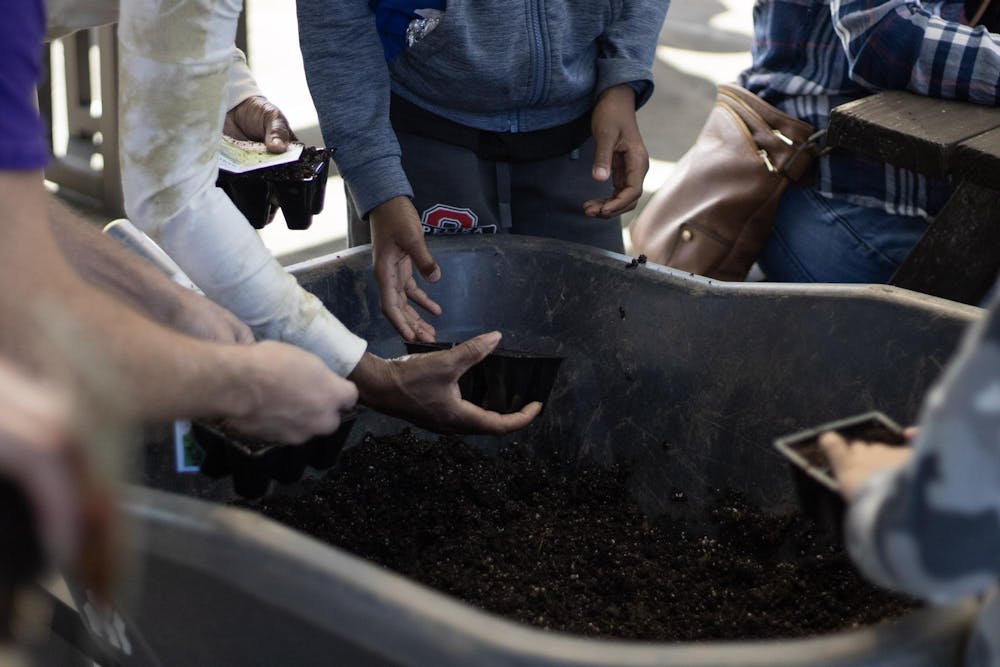
On March 21, Opelika Grows, also called O Grows, and the Lee County Master Gardeners of Alabama co-hosted a seed starting workshop at the Opelika Community Garden for members of the public and garden enthusiasts. The workshop was a free, hands-on guide to gardening, in which master gardeners led attendees through seed selection, storage and planting techniques.
From 10 a.m. to 12 p.m., the gardening workshop was held at the Opelika Community Garden nestled behind the Opelika Public Library. Over the years, O Grows has been expanding the garden, which now includes a main garden space, a large pen filled with goats, a greenhouse storage area and a covered patio surrounded in plants where the workshop took place.
O Grows ran the workshop in tandem with the Lee County Extension Office and local Alabama Master Gardeners. Master Gardeners are individuals, often retired, who take a 16-week gardening course, which includes choosing a specialty and completing a project in selected specialty to become a certificated master gardener in Alabama.
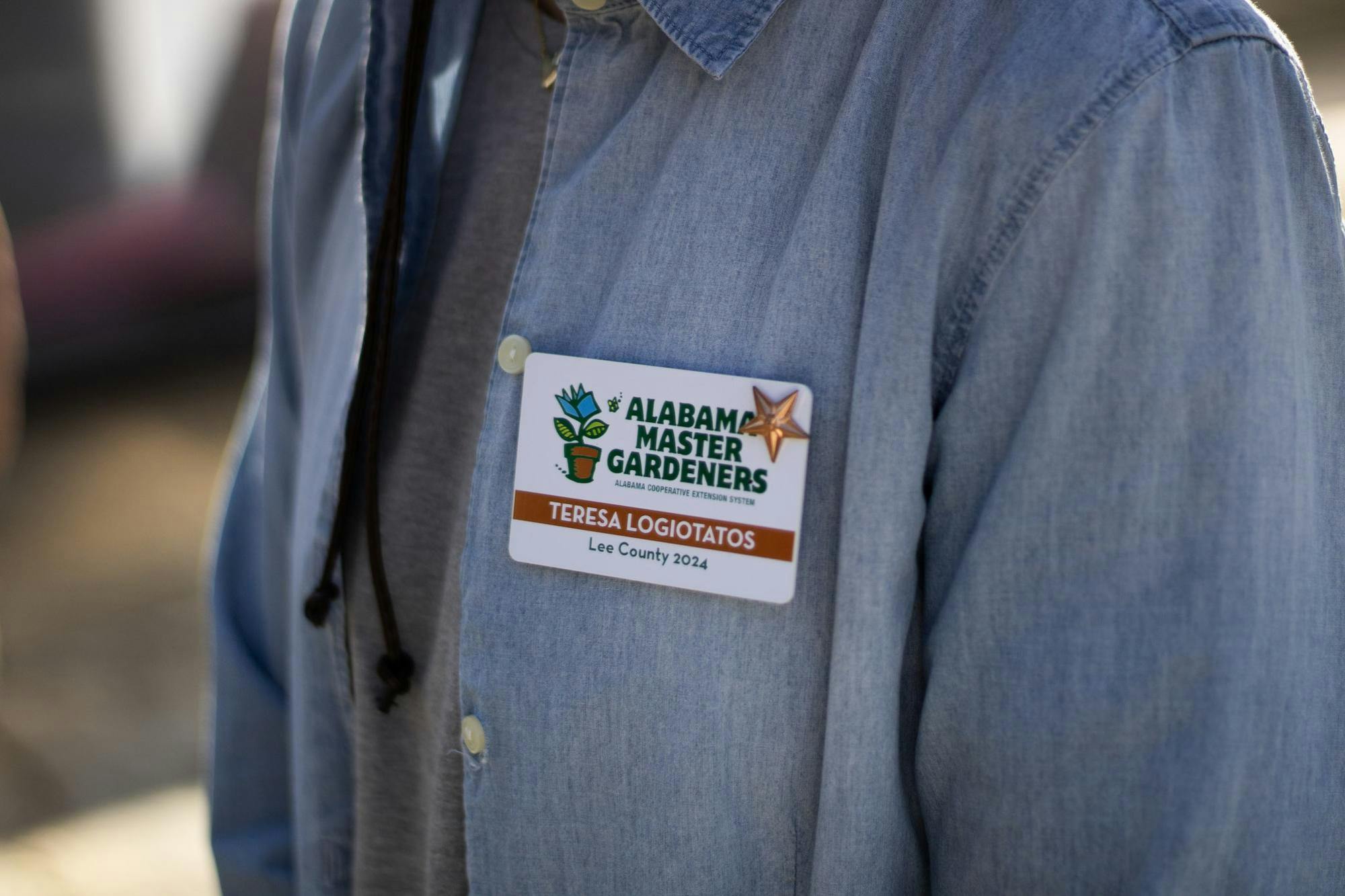
A Master Gardner's name tag at the O Grows Community Garden on Saturday, March 21.
The mission of O Grows and the Master Gardeners is to provide education, research and engagement opportunities on agriculture on small and large scales. As part of that mission, they coordinate workshops to inspire community members to get outside, get a little dirty and grow their own produce.
Antonio Martinez, Auburn University alumnus and O Grows member, said the workshop was designed to cater to beginners, who want to learn more about starting gardens.
"We did this workshop with the idea that it's time to start seeds. What if we did that together? A lot of people have interests in seed starting. A lot of people have interests in gardening, but it gets really difficult to try to learn all these things," Martinez said. "Agriculture does not have to be distant or dead. It can be local, affordable and accessible."
However, Martinez reassured that these workshops can still be useful for specialists, highlighting how their agricultural work is essential.
"To those who grew up maybe gardening, gardening adjacent, farming or farm adjacent, hey, we see you. This is still valuable," Martinez said. "You're cared for. Somebody sees you."
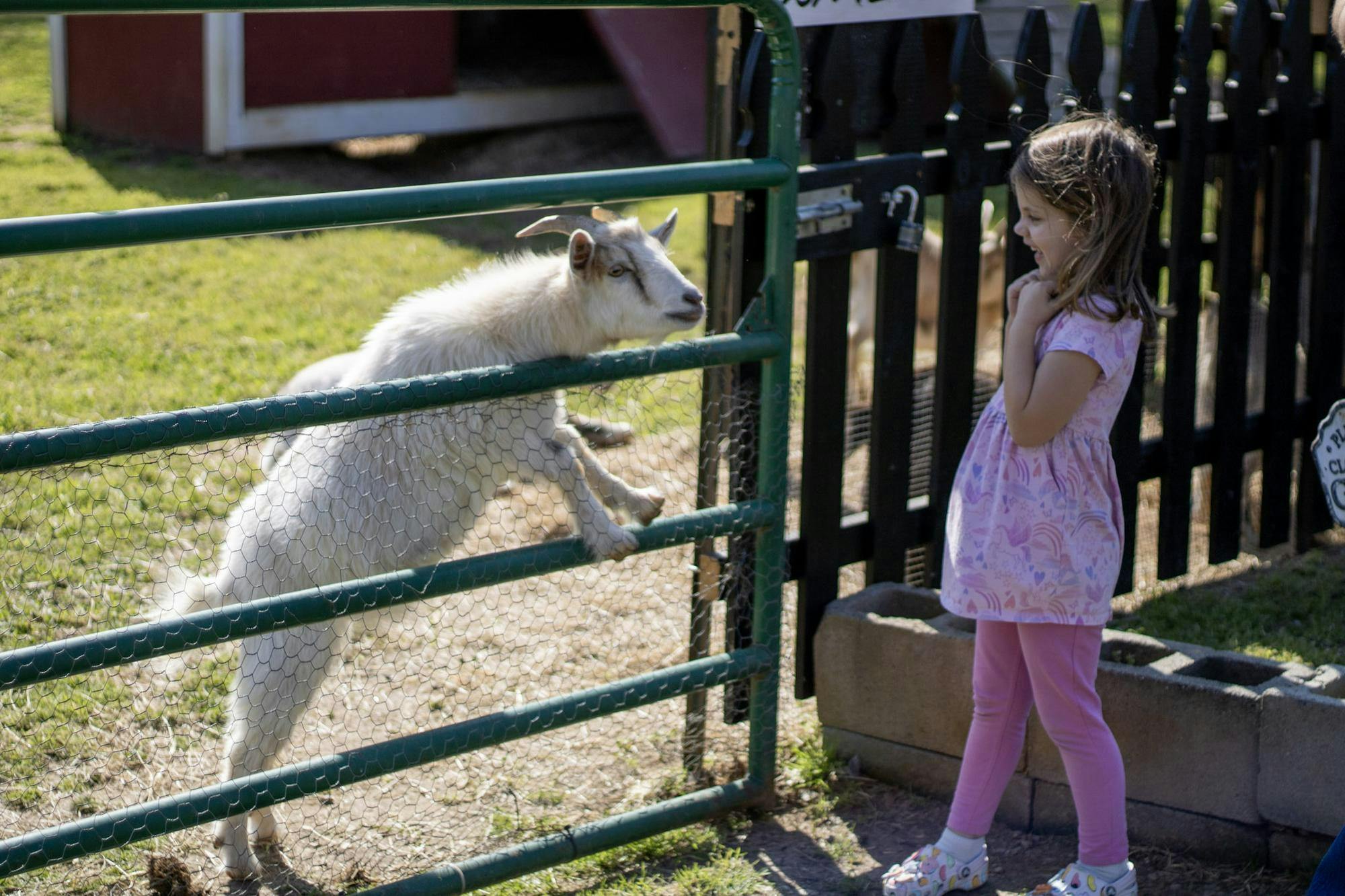
A goat surprising a young girl at the O Grows Community Garden on Saturday, March 21.
The workshop began with a brief introduction to the groups involved in coordinating the event. Soon after, seed packets were handed out as the workshop leader explained how to properly store and plant seeds and how to prioritize the most vital information on seed packets. The organizer explained that with under the proper storage conditions, unused seeds can last up to 20 years.
The organizer detailed how all one needs to begin planting their own seeds is a good soil medium, plenty of humidity and light and sunlight, whether indirect or direct. He further explained that once the basics are met, there is considerably more leeway, especially with containers.
According to Doug Deason, the master gardener leading the workshop, anything can be a planting container. He described an anecdote where a woman found success using recycled rotisserie chicken containers to germinate her seeds.
As Deason explained, gardening can be hard work, but education about agriculture, its accessibility and its benefits is invaluable.
"You got to put in the work sometimes, but you get the benefit of fresh vegetables, organic vegetables instead of paying premium prices at the grocery store," Deason said. "It's really easy and rewarding to grow your own food. If you're in an apartment and you've still got some sort of patio space or a balcony, you can grown some things in containers that will do perfectly well."
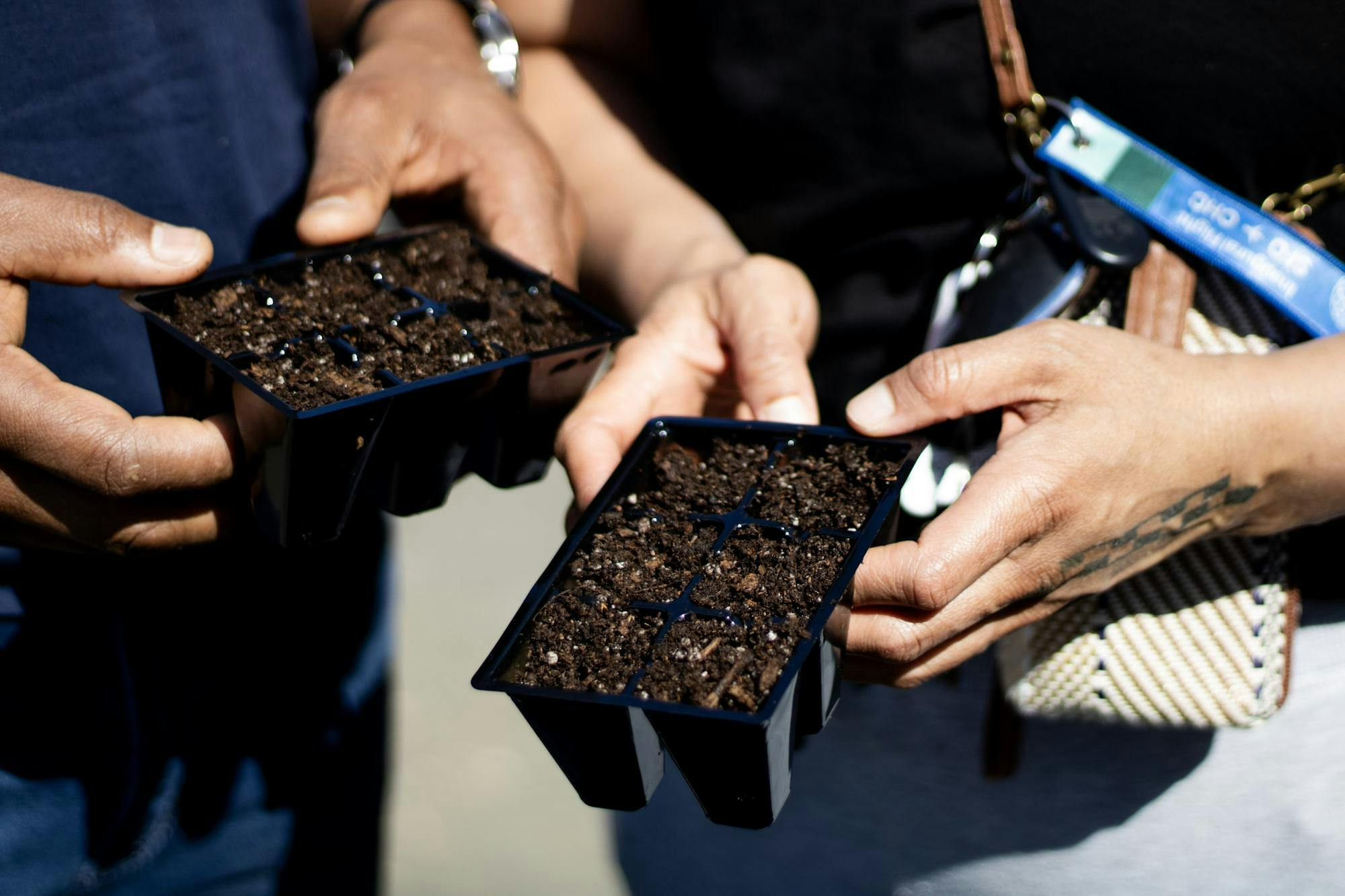
Participants of the Master Gardener's workshop holding their soil cells at the O Grows Community Garden on Saturday, March 21.
Deason also spoke about how resources, including the O Grows workshop and the Master Gardener program, can be beneficial, even for experienced gardeners.
"The whole mission of the Master Gardeners is to help relay research-based information that's been validated and certified," Deason said. "It's not to say how grandma did it is wrong. She was probably doing a lot of things right. She just didn't necessarily have a scientific basis for how she did it."
A main focus of the workshop was helping attendees choose the right seeds, and Deason explained that the most important information to pay attention to on the seed packets is when to plant the seeds, the average number of days required for seeds to germinate, the depth at which the seeds should be planted in the potting soil, the number of days until harvesting is possible and the ideal row spacing for planting seeds in the ground.
Deason said that seed planting depth might be the most important information on a seed packet. Soil depth is also a main area where new gardeners make mistakes. However, Deason reassured new gardeners that trial and error is a major part of the gardening process, so experimentation and patience are crucial.
"If you're a gardener, you've killed a bunch of plants at one point or another. You have to accept failure to some extent. If you plant a seed, not all of them are going to germinate. Not all of them are going to survive the transplant process when you try to unpot them. Not all of them are going to do well going into the garden, and once you're in the garden, not everything's going to survive," Deason said. "Probably the single biggest problem that people have, although there's several I could choose from, is just trying to plant the wrong things at the wrong time."
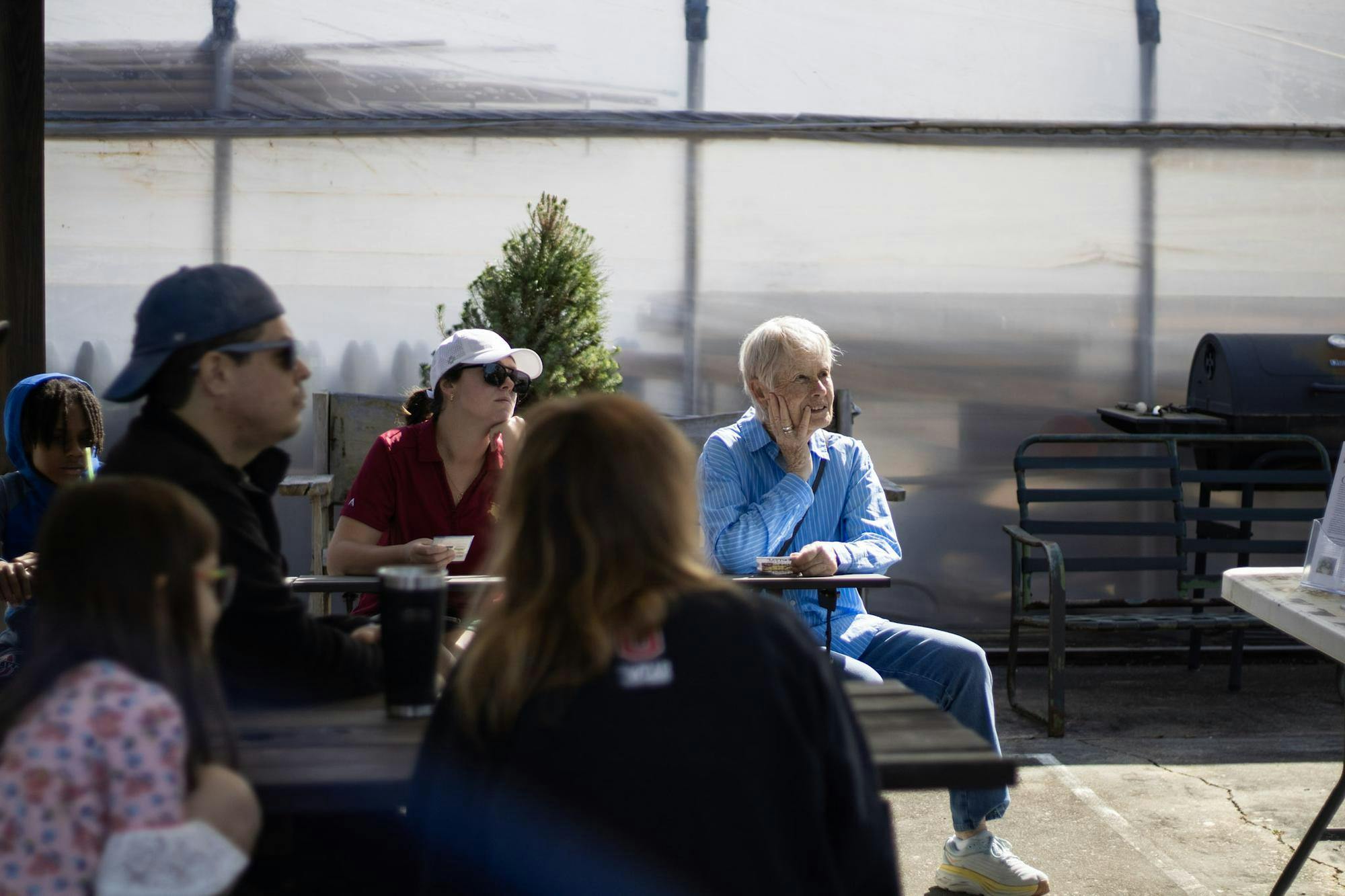
Participants of the Master Gardener's workshop at the O Grows Community Garden on Saturday, March 21.
Once the information portion concluded, attendees were invited to plant their own seeds. Guests had access to seeds for herbs, peppers and other plants. Attendees were given small containers to pack with peat moss and plant their seeds in, as the master gardeners tailored advice on how to best care for each seed depending on the type and the attendee's living situation.
Claire Noble, guest and Auburn University graduate student studying crop, soil and environmental sciences, attended the workshop to learn about growing her own food at her apartment. Noble highlighted how valuable a resource like a community garden can be for college students living in apartments.
"All the Master Gardeners were super helpful and very informative on the different plants that they were providing," Noble said. "I think it's really awesome that they use the resources for the community to use, because a lot of people don't have the space."
Fellow guest and Auburn local Jerrine Thomas brought her mother and son to the workshop to learn about growing their own food.
"I just wanted to do something different and just get more involved. Also, my mom and I are going to start a garden this year, so when we saw [the workshop], we were like, 'Hey, this will be a great opportunity to come and learn about how to get started,'" Thomas said. "We're super excited about it. It was great information, because now, we know the proper way to store the seeds and get them started."
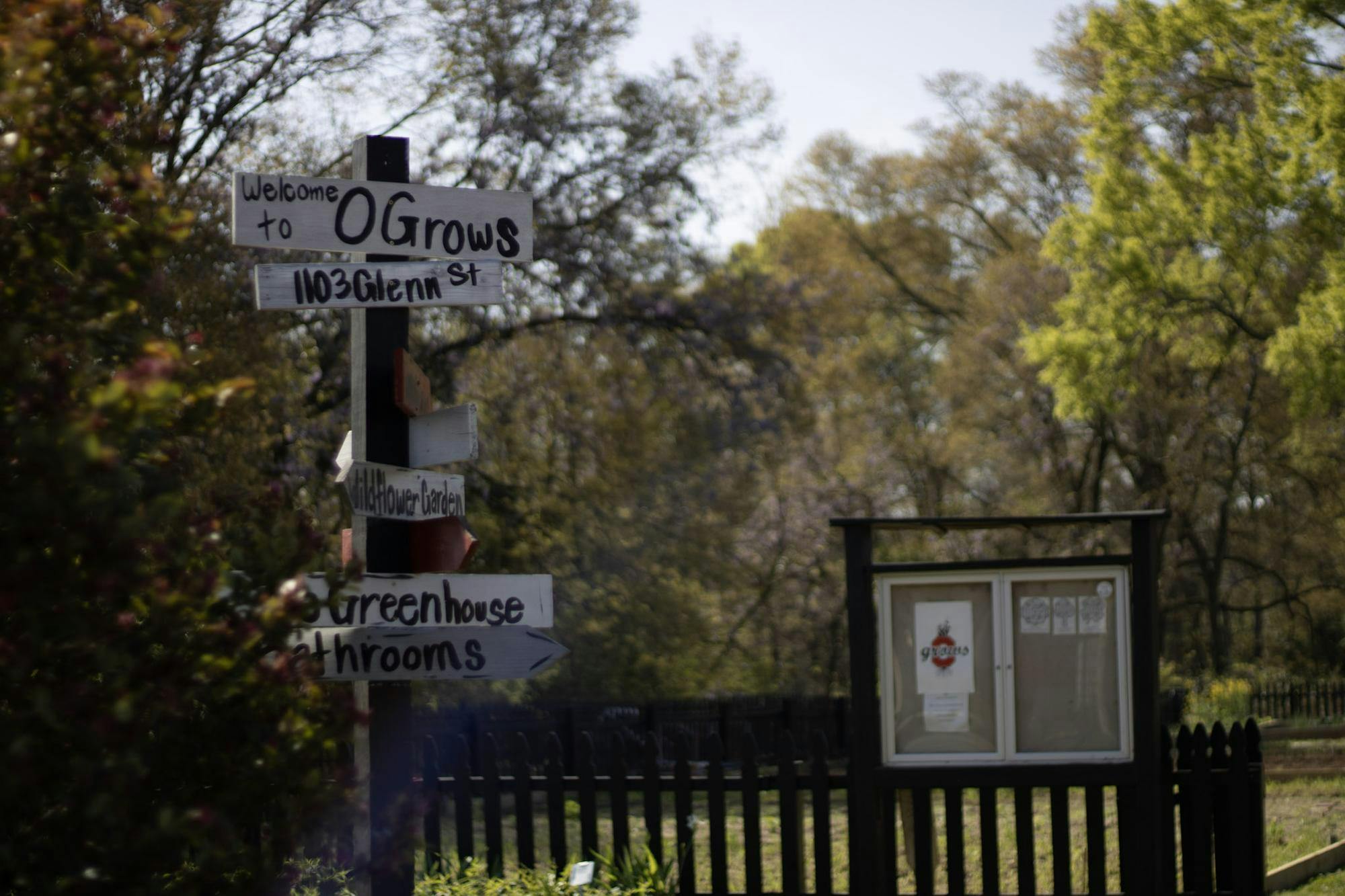
Signage in front of the entrance to the O Grows Community Garden on Saturday, March 21.
For those wanting to get involved with the community garden, O Grows has information on their Instagram and website. The Lee County Extension Office also has information available on their website and an app to track and streamline the gardening process. The Alabama Master Gardeners offer resources, including a hotline where gardeners can call an expert, who will give research and tailored advice. Those with plant problems they can't solve can call the Master Gardener Helpline at 1-877-252-GROW (4769).
On May 2, O Grows will host their Strawberry Block Party on First Avenue in Opelika, where the community will celebrate the local food system. The O Grows Farmer's Market will officially start on May 19 and continue every Tuesday from 3 to 6 p.m.
Those interested in O Grows workshops can attend composting, preserving and seed saving workshops in June, July and August respectively.
Do you like this story? The Plainsman doesn't accept money from tuition or student fees, and we don't charge a subscription fee. But you can donate to support The Plainsman.