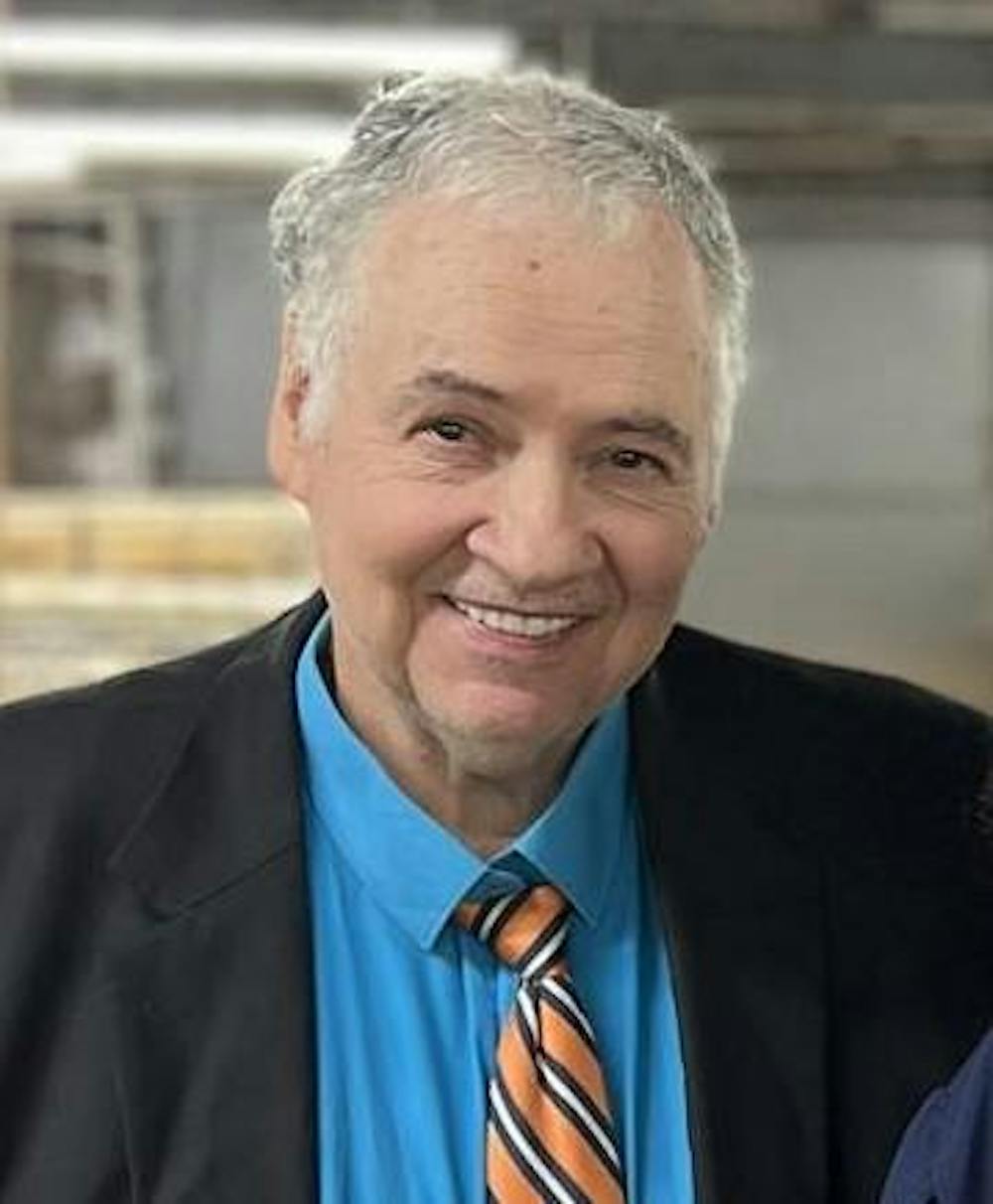
Professor Dr. Rex Dunham has been affiliated with the School of Fisheries, Aquaculture and Aquatic Sciences since 1978, making him the current longest active professor at Auburn University. During Dunham's 48 years at Auburn, he has made extraordinary waves in his research surrounding aquaculture and is recognized as a global pioneer in the genetic improvement of catfish.
Originally from Peoria, Illinois, Dunham has been interested in becoming a catfish farmer ever since he was a child, as he recalled that living on a farm fostered his love for wildlife. In his undergraduate years at the University of Illinois, Dunham decided he wanted his career to become more specialized and was drawn to the nationally-renowned Department of Fisheries and Allied Aquaculture at Auburn University. While Dunham was almost certain that Auburn would be his home, he toured the college to be sure that it was where he wanted to attend.
“I did a tour and went through the South, and I love ponds, and the moment I stepped on this facility and saw all those ponds, I was in love,” Dunham said.
After receiving his master's and Ph.D. from Auburn, Dunham joined the University's staff upon graduation. Now, he likes to joke that they could never get rid of him.
Dunham's research is centralized on catfish genetics, including specialized areas such as selective breeding, hybridization, gene transfer, gene mapping and reproductive physiology.
In his time at Auburn, Dunham has been at the forefront of major breakthroughs involving the genetic improvement of catfish, including the creation of an interspecific hybrid between a channel catfish and a blue catfish. Dunham recalls that it is the most impactful project he has done in his career, as it immensely benefitted catfish farmers.
“It’s the best example of genetic improvement in aquaculture ever, really,” Dunham said. “What our farmers were originally able to grow in one acre of water, they’re able to grow nine times more catfish than they did in 1980, and not all but a good proportion of that is because of the use of hybrid catfish, which is not universal, but it accounts for about 70% of U.S. agriculture production.”
Dunham is also the first to complete a gene transfer in catfish using xenogenesis, a reproductive surrogacy technology that creates an easier way for farmers to make hybrids between channel and blue catfish. Xenogenesis can rapidly expand an endangered species, which has applications in natural resources, population management and conservation, just a few of Dunham's core values.
“If there was some type of environmental catastrophe, and we lost all the large mountain bass in the world, but we had a semi-related species left, we could thaw those cells out and put them into a host and bring back an extinct species,” Dunham said.
In his research, Dunham is dedicated to preserving important genetic lines of catfish breeds through logical methods and supporting the global catfish farming industry. He hopes for more sustainable farming practices in the future, which can impact growing food in smaller spaces and therefore preserve natural populations and resources.
In addition to his work benefitting the catfish industry, Dunham teaches and mentors hundreds of students both at Auburn and countries abroad where Auburn Fisheries are teaching students aquaculture technologies.
One of Dunham's biggest takeaways from his time at Auburn has been the impact his teaching has had on his students and their careers.
“It’s quite rewarding and makes the other headaches worthwhile,” Dunham said.
When he isn’t teaching or conducting research, Dunham enjoys spending time with his family and watching Auburn football. One of his favorite Auburn memories was watching the Kick Six during the 78th Iron Bowl in 2013.
With over 400 published scholarly works and multiple honors recognized around the world, Dunham has embraced the Auburn Creed to the fullest by relying on its values throughout his career. Whether it involves teaching, conducting research or hoping for a more sustainable future, Dunham has built a legacy at Auburn that will be remembered for generations.
“My Auburn experience has been fulfilling, and I would do it all over again,” Dunham said.
Do you like this story? The Plainsman doesn't accept money from tuition or student fees, and we don't charge a subscription fee. But you can donate to support The Plainsman.
Chloe Glass, sophomore majoring in English language arts education, is from Daphne, Alabama. She has been with The Auburn Plainsman since the fall of 2025.