The Auburn University Creed was published by The Auburn Plainsman on Jan. 21, 1944, around two months after George Petrie finished writing it. The originally published issue was brief: “We will not elaborate; the creed speaks for itself, powerfully.”
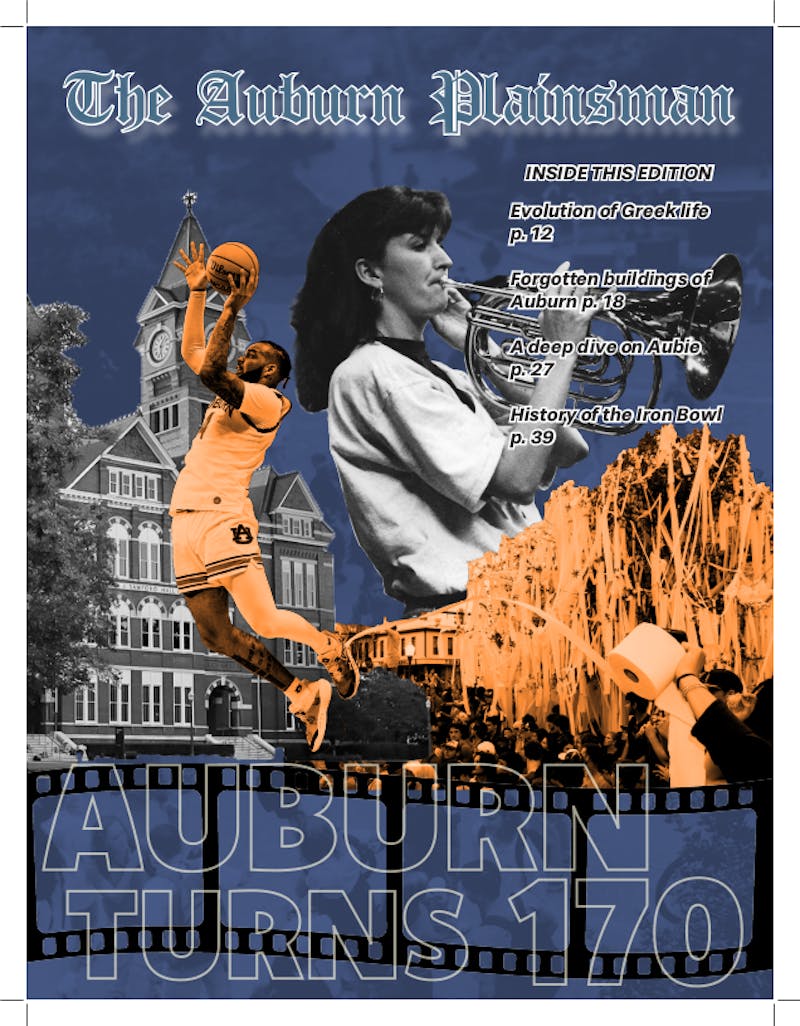
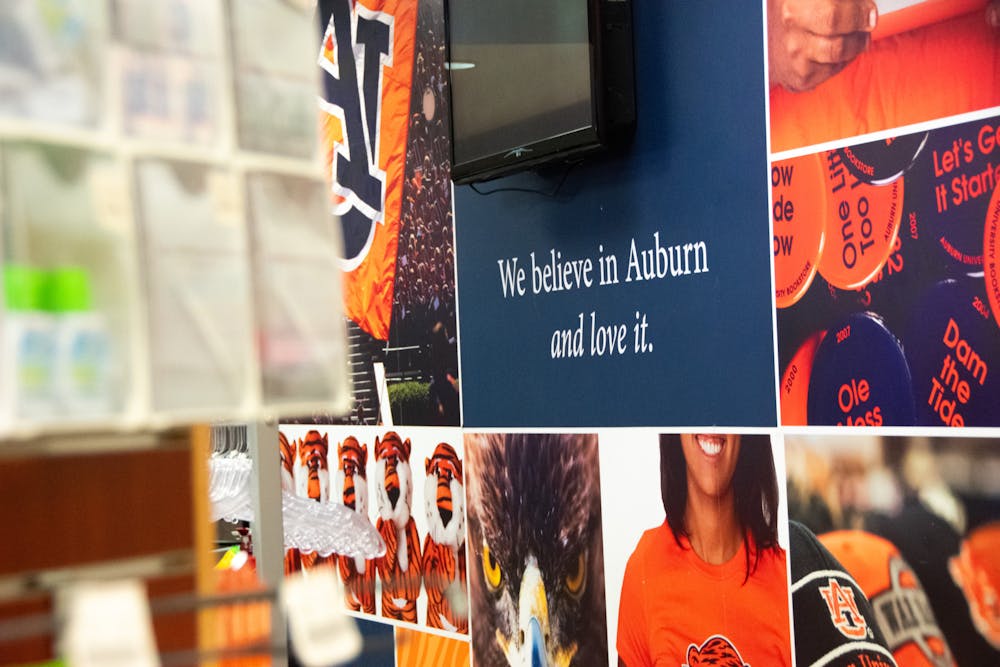
The Creed's past and the people who carried it with them remain tremendously important to believing in Auburn and loving it. One such example is especially worth noting as we step into 170 years of Auburn.
Well known for his title of honor across Jordan-Hare Stadium, Shug Jordan served as Auburn's football coach from 1951 to 1975. What may be less well known is his role in one of the most strategic and costly assaults on the Axis occupation of Western Europe – and how he took Auburn with him.
Jordan was one of the few brave men to land in Normandy in 1944 and survive as a member of the First Engineer Special Brigade. According to multiple sources, an original clipping of the Jan. 21 Plainsman article was tucked into Shug Jordan's boot as he charged that beach on June 6, 1944.
I kept wondering, as I read this story, which lines may have been racing through his mind as he charged through the waves.
Perhaps, it was a quiet prayer for a sound body and a spirit that would not be afraid. I imagine that he whispered to himself as he pushed up the beach and “saw ’em [soldiers] stacked up like cord wood”, as he recalled it later.
Or maybe, he kept the Creed in his boot, because he loved the last few lines: He believed in his country, a land of freedom, his home. Perhaps, it was not a quiet prayer but a defiant shout. It could have been for his belief in God, and in the men and women of Auburn and the United States of America.
In an incredible interview, one of the few in which, according to his son, Jordan talked about that day in Normandy, he recalls the shrapnel that landed in his arm fifteen minutes after landing. To my surprise, football was on his mind.
Not only the culture of the sport, but he remembered being a player, having seen “many a fine football player, or just an ordinary football player, give it everything he got.” He noted that without these memories, “I don’t know if I would have gotten any further that day.”
Perhaps, remembering his life’s work for the young Auburn football program, Jordan used lines of the Creed to root him in the cultivation of clean sports and sound physicality, which inspired him to continue after being wounded.
Or maybe the clipping of his local paper, sent by a friend, was simply a tangible comfort to him, a reminder of home. Perhaps, human touch, the touch of fellow man sent thousands of miles from the Loveliest Village on the Plains, provided courage irrespective of the words printed in that original article.
So, with the Auburn Creed in his boot and the steadfast inspiration of Auburn football in his spirit, among many other hopes and fears, Jordan made history, charging through bloody sea spray to one of the most pivotal victories of World War II. For his heroism in pressing on after the shrapnel entered his body, Jordan was awarded the Purple Heart.
So, as Auburn treads onward into a new semester, it's important to reread the words that have inspired the greatest heroes of our past. The Creed speaks for itself. It makes Auburn something worth believing in.
Do you like this story? The Plainsman doesn't accept money from tuition or student fees, and we don't charge a subscription fee. But you can donate to support The Plainsman.