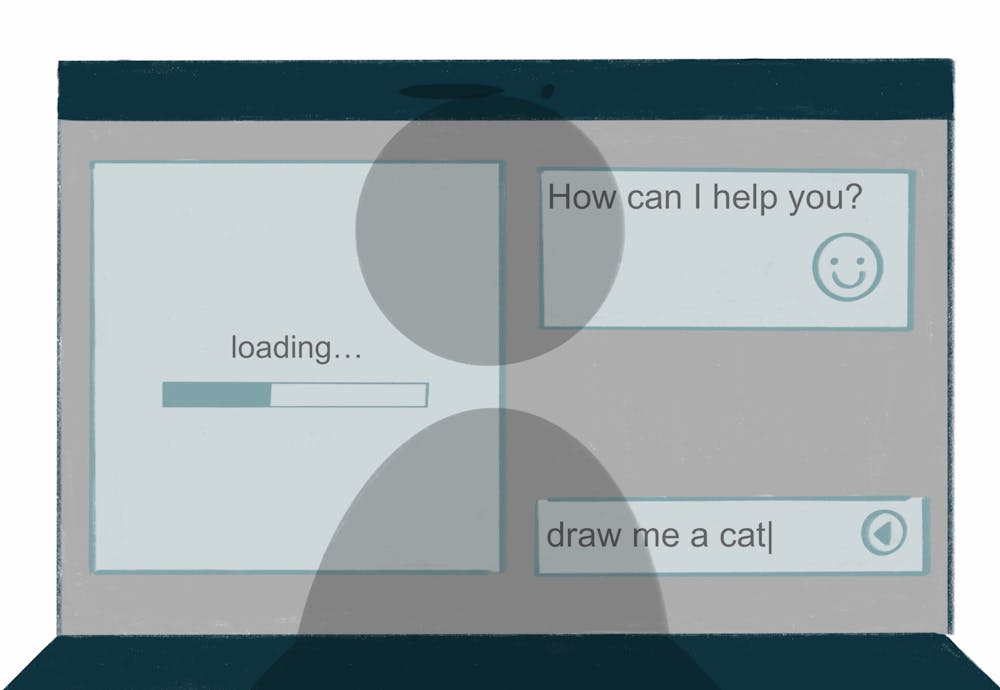
Why would we want to automate every part of human life? Have we become so desensitized to human connection through technology and social media that the real purpose of art has become incomprehensible? Art exists as a form of creative therapy, right?
Throughout my first semester in college, I’ve been thinking a lot about why humans create art and the real purpose it holds in our legacy as humans,. Somewhat surprisingly though, I feel like my ideas are constantly being challenged not only by the online world but also by my professors and the university's principles.
It's undeniable that learning how to harness artificial intelligence is crucial for future job employment in our advancing technological workforce, but the instances in which I see AI used the most on campus here at Auburn come in creating AI art and using AI to help the writing process. Two practices that I think are incredibly important to keep apart from AI.
So as I’ll explain through this article, I believe it’s incredibly important to understand the devastating impacts of allowing AI to seep more and more into our entertainment media and why AI cannot create true art, because true art stems from human experience.
In 2016, a group of employees at the globally-acclaimed animation company Studio Ghibli pitched an artificial intelligence model of a zombie-type creature grotesquely rolling along the ground to the animation studio’s co-creator, Hayao Miyazaki, in an attempt to implement their creation into an upcoming film.
The employees said to Miyazaki that the purpose of the artificial intelligence was to "build a machine that can draw pictures like humans do."
Miyazaki responded bluntly by saying, “I strongly feel that this is an insult to life itself. . . . I feel like we are nearing the end of times. We humans are losing faith in ourselves.”
This encounter was almost ten years ago, and as dramatic as Miyazaki's response may seem, I feel it to be all the more true in 2025 with even more significant advancements in the artificial intelligence industry.
A library representative visited my history class this past fall to teach us how to use Adobe Firefly for an upcoming assignment in that class, and during the presentation, it was clear that her main reasoning for why AI art is great is that it “allows” everyone to be an artist.
But what does it mean to allow someone to be an artist?
My main takeaway from the presentation was that she believed what qualifies someone as an artist is the ability to produce something appearing professional regardless of the process. However, the idea that what makes art great is strictly its appearance and relies on zero other factors is false. Don’t get me wrong, of course, appearance plays a major factor in art and separates the masterpieces from the crowd, but that’s not all art is.
Art is effort. Art is passion. Art is human. Artificial intelligence is none of these things.
Art can range from a child's drawing of themselves with their family to the Sistine Chapel. It doesn’t matter if it’s stylistically well-designed art or a bunch of crayons scribbled onto a paper in a random order. The message of humanity is still the same.
It’s time we stop gatekeeping what it means to make great art and instead gatekeep what it means to make true art, because that is definitively more important and carries an insane amount of weight on its shoulders.
Art is the purest form of human expression. Art is what differentiates us humans from other species of animals. It’s what helps us sympathize with other lifestyles and is what we share with our ancient ancestors. We find humanity in art time and time again. So, why do we seem okay with removing humanity from the arts? If anything, we should protect it from becoming a homogenous product of effortless production, no?
The future of our existence as humans will become more convenient due to artificial intelligence for sure, but the convenience is worth losing passion and creativity over. The only person that allows you to be an artist isn't yourself and your own striving towards creative creations. A homogenous pool of bland and uninspired pixels of artificiality can’t express humanity or love – and never will. So, I really hope we can turn around from artificial intelligence "art" before it's too late.
Do you like this story? The Plainsman doesn't accept money from tuition or student fees, and we don't charge a subscription fee. But you can donate to support The Plainsman.