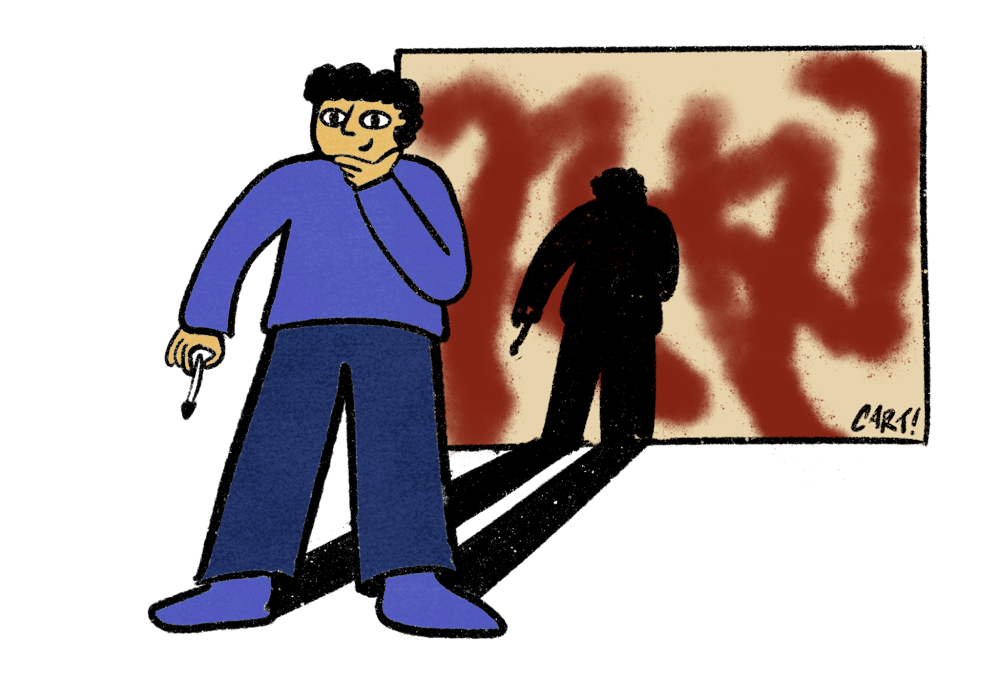
Sometimes, our favorite pieces of art are created by objectionable artists. So how do we square the art that we love so much with the oftentimes unsavory individuals that make it?
In today’s context, it can be easy to take a hardline stance against consuming media made by disagreeable people. Now, obviously, it is up to the consumer to choose what they want to engage with, but often, people will attempt to shame those who choose to engage with the art of objectionable artists. I believe that this is a problem.
If we take the idea that we, as a society, must completely draw back from art made by distasteful artists, then where does it end? It is easy to sit back and denounce the consumption of tainted art when it’s something that we personally don’t care for. But it’s harder to separate ourselves completely when it’s a piece that’s important to us.
Take, for example, the beloved books of Dr. Seuss. Seuss, put simply, was not a morally upstanding man. He cheated on his sick and dying wife, leading her to commit suicide. Shortly atfer, he went on to marry his mistress. On top of his personal life, many of his books have stopped being printed for caricatures and stereotypes that we now recognize as racist. Does this mean we should stop today’s youth from consuming classics like Cat in the Hat and Green Eggs and Ham?
Seuss isn't the only bad apple. Walt Disney has been accused of racism and released many films that are fraught with racial insensitivities, such as Song of the South, Dumbo and Peter Pan. Yet, no one would say that we need to "cancel" Mickey Mouse. More recently, artists like Kanye West and J.K. Rowling have made beloved art, yet even they are not safe from espousing bigoted views in their personal lives.
And so, the solution would seem simple, right? Simply ignore the artists that made the art we consume and focus on the art itself. There's no reason to have moral hang-ups on consuming art, right? We should engage uncritically with whatever we please. However, in my opinion, that idea is problematic as well.
Although it is ultimately up to the invdividual to decide what they do and don’t want to engage with, I think it is important to engage critically with art. Art is often inextricably tied to the person that created it. It is important to ask who created any given piece of art, and what context that person made it in?
Take, for example, David Burke, better known by his stage name, D4VD. The 20-year-old indie music artist was a rapidly growing sensation. However, the singer’s career came to a halt after the body of a 15-year-old girl was found in the back of his Tesla. The deceased girl was confirmed to be runaway Celeste Rivas Hernandez. Since the identity of the corpse was confirmed, accusations of D4VD’s romantic involvement with the 15-year-old girl have consumed the internet. Although, at the time of writing this, no charges have been filed, the court of public opinion seems convinced that D4VD had something to do with her death.
Obviously, this is an extreme example, but the point still stands. Context is key. D4VD was famous for making love songs with dark themes. If the accusations around the singer's romantic involvements are true, these songs could very well be about a girl who would have been as young as 13 years old at the time of their creation. Is that something that we should proudly listen to or engage with?
Also, it’s important to take into account the digital age that we live in. Today, artists can receive residual income for each stream of their songs. If the accusations are true, each stream would contribute to the pockets of a deplorable man.
By engaging with art from immoral people, we can be engaging with pieces that were spawned from deplorable actions or help similarly deplorable people gain wealth. With those things in mind, I believe it is up to the consumer to think critically about what art they engage with. I wouldn't say this means that we should divest completely with the art of those we disagree with. However, perhaps some things should be a dealbreaker.
Do you like this story? The Plainsman doesn't accept money from tuition or student fees, and we don't charge a subscription fee. But you can donate to support The Plainsman.
Jordan Wright, sophomore majoring in Law and Justice, has been with The Auburn Plainsman since January 2025. He is currently serving as the Opinion Editor.