Editor’s Note: The Auburn Plainsman editor-in-chief Brychelle Brooks served as one of two Student Media moderators at SGA’s Major Candidate Debate.
On Tuesday, Feb. 3, the Student Government Association hosted the Major Candidate Debate in the Harold D. Melton Student Center Ballroom at 5 p.m. Eagle Eye TV station manager Jack Sublette and The Auburn Plainsman editor-in-chief Brychelle Brooks moderated the debate, with news station WTVM broadcasting in partnership with Eagle Eye TV.
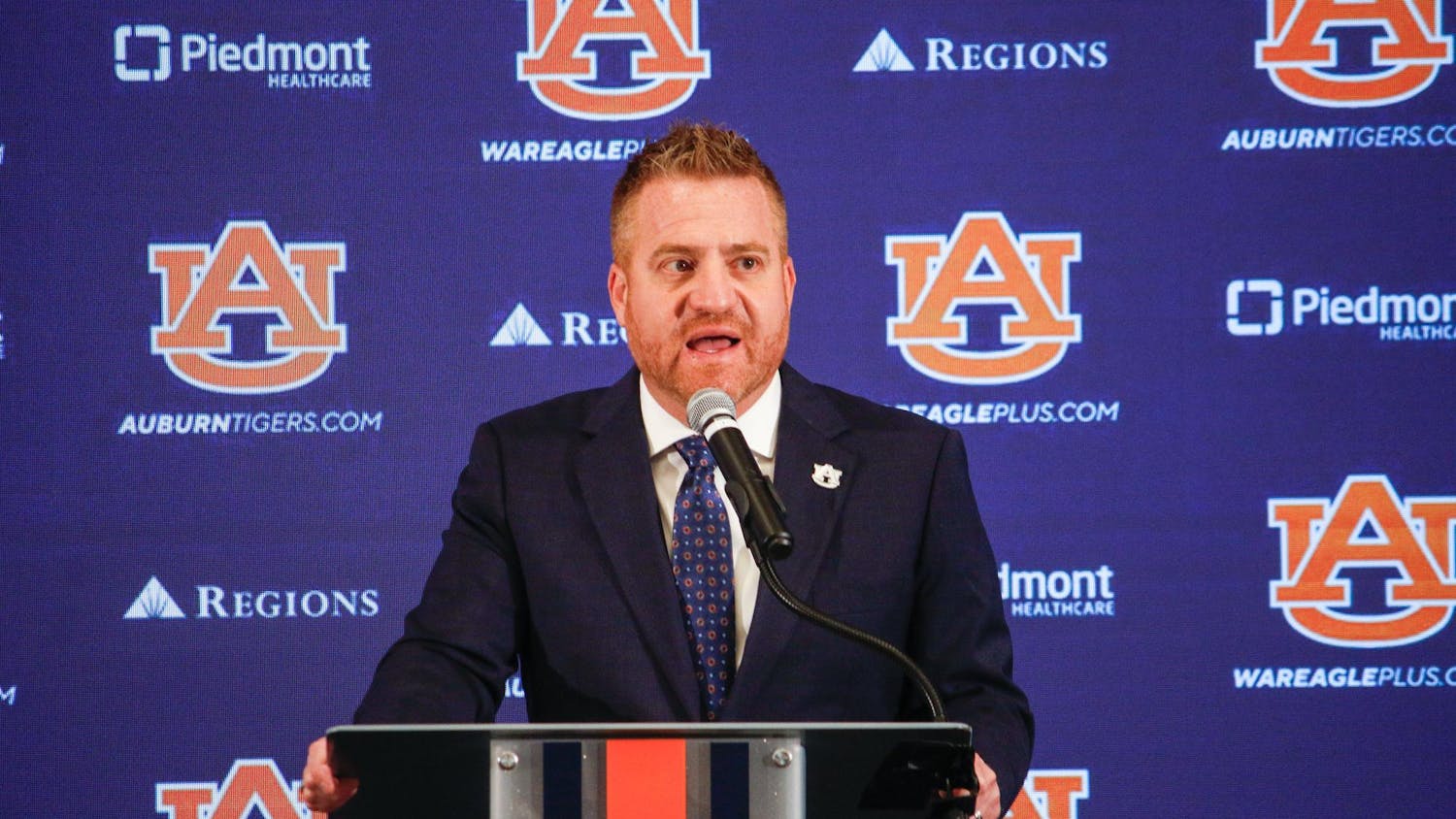
Before outgoing SGA President Owen Beaverstock welcomed everyone to the debate, Beaverstock was briefly interviewed by Lucas Hazelrig, news producer for EETV. Beaverstock answered several questions about his personal and professional progress as SGA president and offered advice to the major candidates.
“I would encourage you, you two guys and all of y'all, just to know what you're really about, why you're doing this.” Beaverstock said. “What an incredible opportunity it is to serve something that's bigger than each and every one of you guys […] [I’m] jealous, in a way.”
Each candidate received a minute for their opening remarks. Student Media moderators then asked a series of questions directed at each individual candidate, allowing for a one minute answering period and a 45 second rebuttal from the other candidate. Each round concluded with 30 second closing remarks from each candidate. No questions were shared with or approved by any campaigns in advance of the event.
“Local and national news sources will serve as moderators for all public debates. To align this structure and to provide for a real world experience for all students participating, we’ll have Auburn University Student Media leaders as moderators for tonight's debate,” Beaverstock said.
Moderators welcomed each group of candidates to the stage before every round.
Miss Auburn
The five Miss Auburn Candidates provided opening statements, closing remarks and had a minute-and-a-half to respond to one unique question. They did not have a rebuttal period.
Virginia Anne Holmes, junior in speech, language and hearing sciences, opened the debate with a statement about her ideals and platform, “Hand In Hand With Virginia Anne,” which centers around connecting Auburn students to the administration, other students and alumni.
“Auburn is going to be what you make it to be. It's all about your story and really finding your passions and bringing your passions onto this university and making it your own. I think I've really seen that through my story,” Holmes said. “It's a big university, but it's important to really get plugged in to find your community here on campus.”
Meghan George, junior in neuroscience, discussed her platform, “Made for More with Meg,” in her opening statements. George’s goals include learning from each others' unique traits to grow, implementing a mentorship program and leaving a “lasting legacy of service.”
When asked what part of the Auburn Creed, other than human touch, guides the way she represents Auburn, George cited the opening statement, “I believe in work, hard work.”
“I think that we can be really quick to just invite others in the community and into the Auburn Family along to what we're specifically passionate about, but it takes work to connect those outside of our own interests and bringing them in to what they're passionate about, what they want to get involved in, and how they can be a part of the Auburn Family in a way that's just specific and unique to them and their story,” George said.
Riley Johnson, junior in elementary education, explained her platform focuses on "selflessly" helping others in three parts: starting your journey, during your journey and ending your journey.
“My campaign is ‘Journey with Johnson,’ and the overarching theme is to leave people better than we found them. It's inspired by my major, which is elementary education, and how we get to build up the next generation of students, and it's been so cool to see them in the community my junior year.” Johnson said. “Also, it's based on my dad, who passed away a year ago, and just things I've learned from his life, and just in the past year, learning how much he loved to serve others.”
In response to a question, Johnson said the week-to-week basis of her role as Miss Auburn would include trying to “mend the gap” between students and relationships across campus.
Camilla Loard, junior in event management, broke down her platform into three parts–the tracks that connect the Auburn Family, the engine that supports everyone to continue and the journey that changes an Auburn student from their freshman to their senior year.
“My platform ‘All Aboard with Loard’ is centered around the idea that every student, no matter their background, deserves to be celebrated on this campus,” Loard said.
Loard cited two former Miss Auburn winners, Riley Parman and Grace Crimm, as Auburn women that serve as role models for her approach to the Miss Auburn role.
“I think it's really cool to see Miss Auburn is someone who is not defined at your role, but is always someone that I've looked up to for whoever that is,” Loard said.
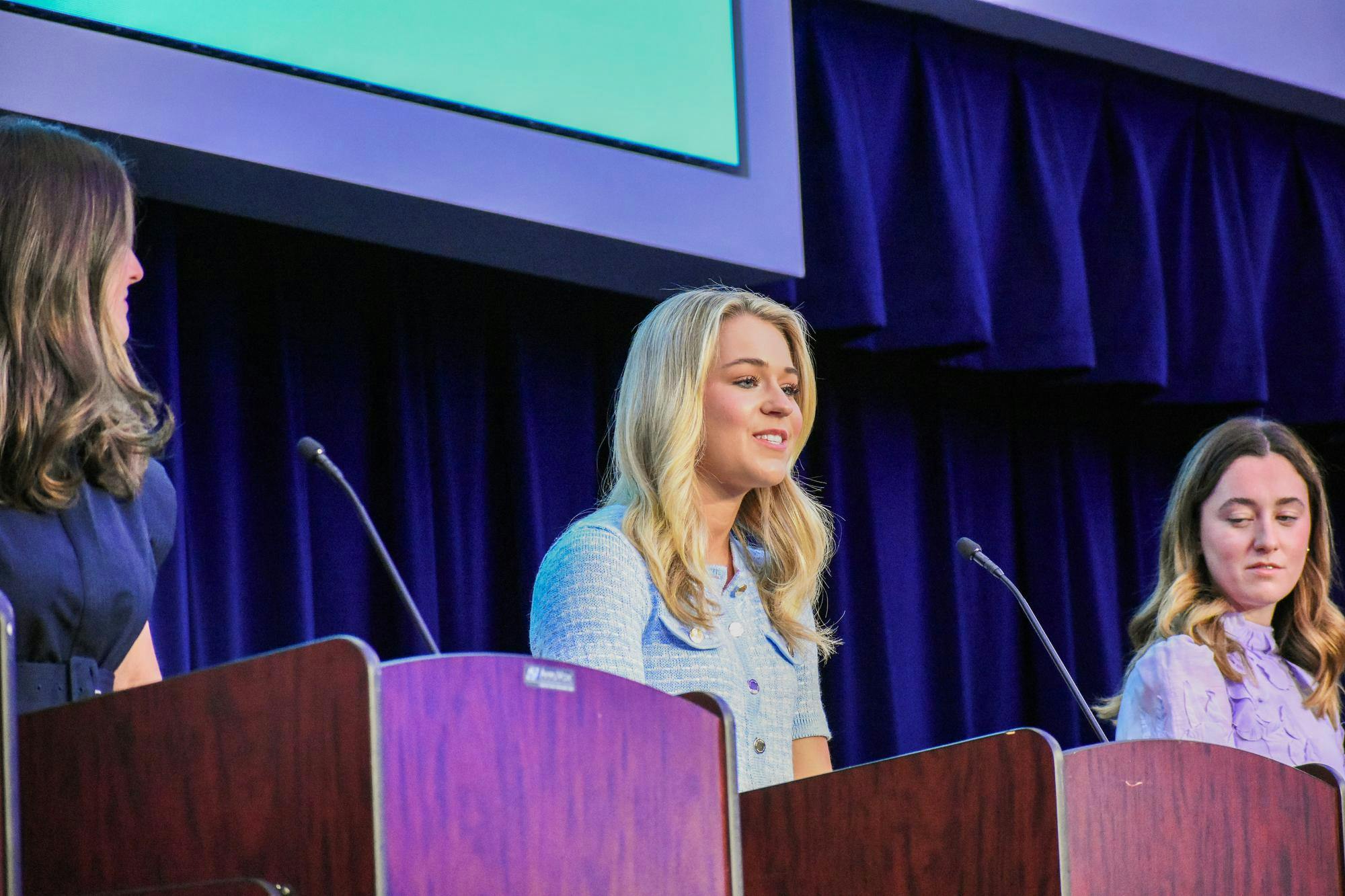
Camilla Loard, SGA Miss Auburn candidate, speaks at SGA debate in Melton Student Center on Feb. 3, 2026.
Eliza Sundberg, junior in business administration, focused her platform, “Save a Seat with Sundberg,” on “the idea that everyone has a seat at the Auburn table,” including alumni, current students and prospective students.
When asked how she planned to foster meaningful connections among Auburn students and what prepared her for this plan, Sundberg described her experience of prioritizing new connections as an out-of-state student during her freshman year.
“Just inviting them in, having the simplest of conversations with them will build that foundation and let them go out and expand their range just a little bit more on campus, and let them get to know Auburn a little better,” Sundberg said.
Treasurer
Jackson Morse, junior in finance, is running unopposed for the SGA treasurer position. His platform, “Money on Morse,” focuses on three points: financial wellness, optimizing the budget and prioritizing the current student.
Morse discussed making a financial literacy course a part of the core curriculum at Auburn University. Although students have the option of taking the course currently, Morse believes making financial literacy courses mandatory will make Auburn students more well-rounded. Morse is also interested in developing “a personal investment initiative that some similar peer institutions” already offer.
When asked how he will advocate for keeping tuition and student fees affordable, Morse said, “I think that comes down to the value of the dollar, and truly appreciating that how hard students and their families work to bring students to this awesome place. And money is at the end of the day, what keeps this place running […] As an out of state person, I knew that that was something that was certainly important to me, so I can personally relate to wanting to keep those costs reasonable.”
In response to a question, Morse emphasized the cost of housing as one of the greatest financial concerns facing students today.
“It's a very, just, ambiguous thing to say that we're just going to drive housing prices down, but it's certainly of concern, and is something that I'm excited to look into,” Morse said. “How do you keep the students on this campus? How do you prevent students from having to drive miles in? Again, what makes this place what it is here?”
Vice President
Colin Hale, junior in finance, described the three points in his platform, “All In with Colin.” His first point, here’s what’s on the table, is based on transparency and accountability from the administration. His second point, play your hands, is based on budget oversight and allocation. Hale ran out of time during one-minute opening statements for his third point, all in, which focuses on impacting students.
Hale has previously served as an SGA senator for the college of business and the chair of the budget and finance committee.
Lilly Pool, junior in English in literature, focuses on embracing, engaging and empowering Auburn students with her platform, “Dive in with Pool.” She has previously served as a two-term SGA at-large senator and the chair of the code of laws committee.
When asked how she would use her relationship-building leadership style in the student body, Pool said, “Through conversations with my peers around me, I was able to get involved with organizations and build my Auburn experience. And I think that that just translates over to building relationships with those younger than us and just helping them rise to the different occasions and opportunities that are presented to them.”
In rebuttal, Hale, who said his leadership style comes from his work ethic, described turning a typically seventh month process for the budget and finance committee chair into a one month process, in which he met with organizations and people across campus. He believes using those “relationships, but also the work ethic that came behind that, is going to be very beneficial” as vice president.
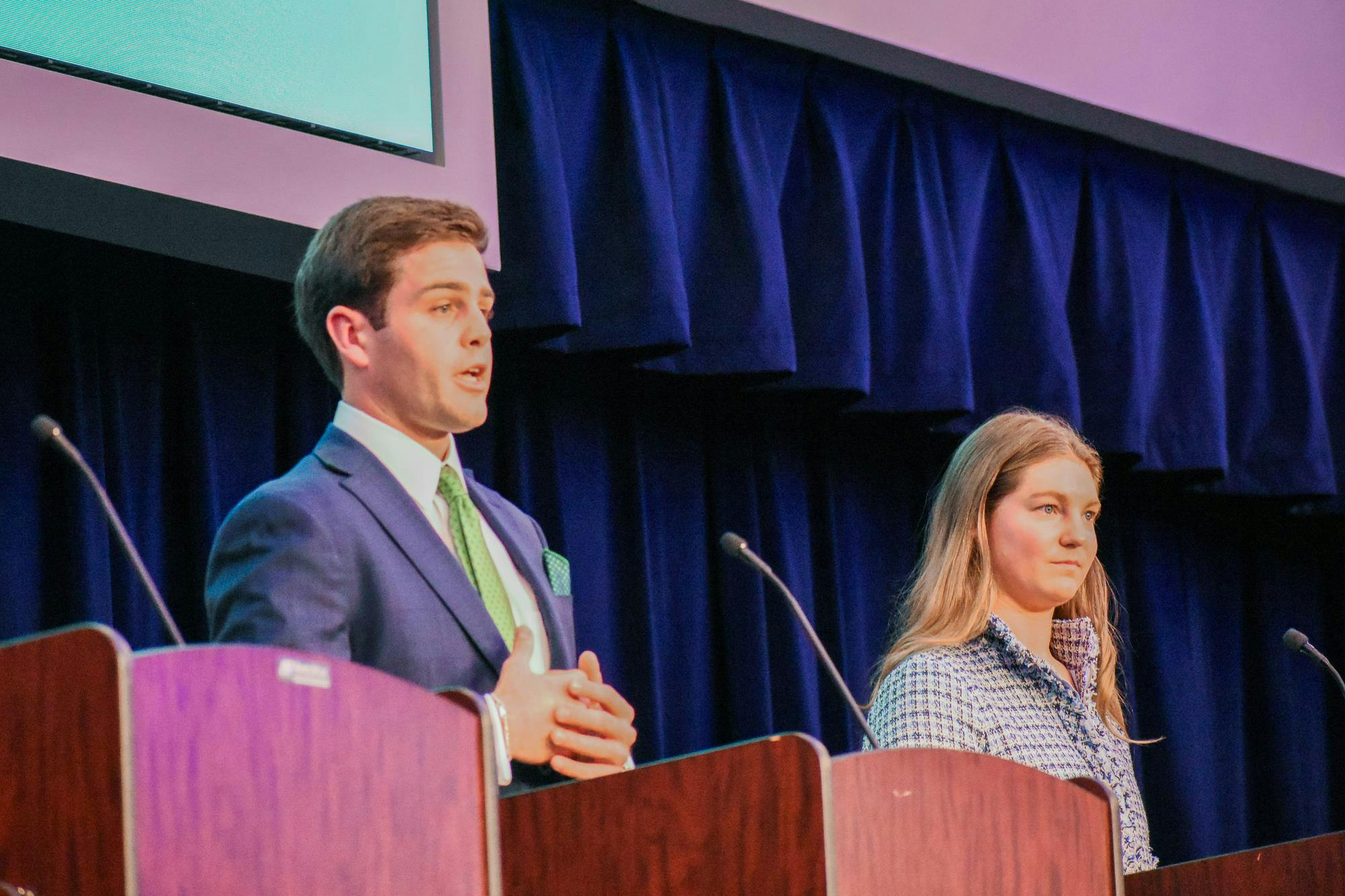
Colin Hale, candidate for SGA Vice President, speaks at SGA debate in Melton Student Center on Feb. 3, 2026.
Hale proposed better communication to students about construction updates, when asked about one thing he would change or clarify in the SGA code of laws. Pool, who has served as the chairman of the COL committee, wants for each chapter to continue to be revised and “how those processes and that code actually affects the exact process that we [SGA] do.”
Pool also discussed standardizing lines of communication and forms, like syllabi, as one potential resolution she would advocate to administration.
When asked what they would do if they encountered a piece of legislation desired by students but resisted by other campus stakeholders, both candidates praised Auburn University’s administration for recognizing student feedback.
“I think that that's something that comes with the job in SGA, especially as you get higher up, just working with administration. You really want to listen to what they [the administration] have to say, because at the end of the day, they really know what's going on. They're working hard at a higher level than we are, but we are also on feed with the students. We're at their level, and we hear them,” Pool said. “So being able to be in those meetings with administrators and being able to be a voice of the students, is super important, while also listening to what they have but giving them every bit of feedback we have to offer.”
President
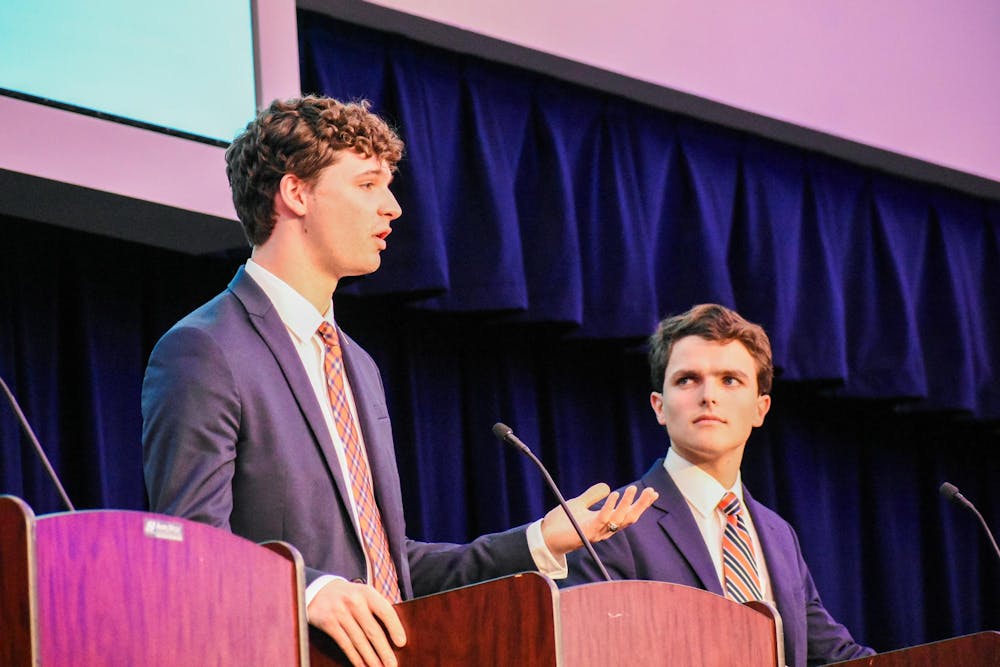
Landen Childress, junior in finance, opened with his three-point platform, “Lead with Landen,” centered on leading by legacy, action and example. Childress has previously served on SGA’s Lobby Board.
Willis Orr, junior in business analytics, focused his platform, “Forrward,” on pushing Auburn forward in quality, forward in student opportunities and forward with distinction. Orr has previously served as SGA cabinet assistant vice president of university operations, SGA cabinet assistant director of organization seating program and on SGA’s freshman forum.
Similar to the vice presidential candidates, both presidential candidates praised the administration for listening to the voices of the student body, when asked how they would navigate moments where student priorities conflict with the administration.
When asked how he would advocate for students during Board of Trustees (BOT) meeting as an advisory member, Childress focused on relaying students’ concerns heard in each senators’ office hours to the BOT. On the other hand, Orr said “data is the biggest thing,” and argued that informing the administration with data of students' wishes meant the most for change.
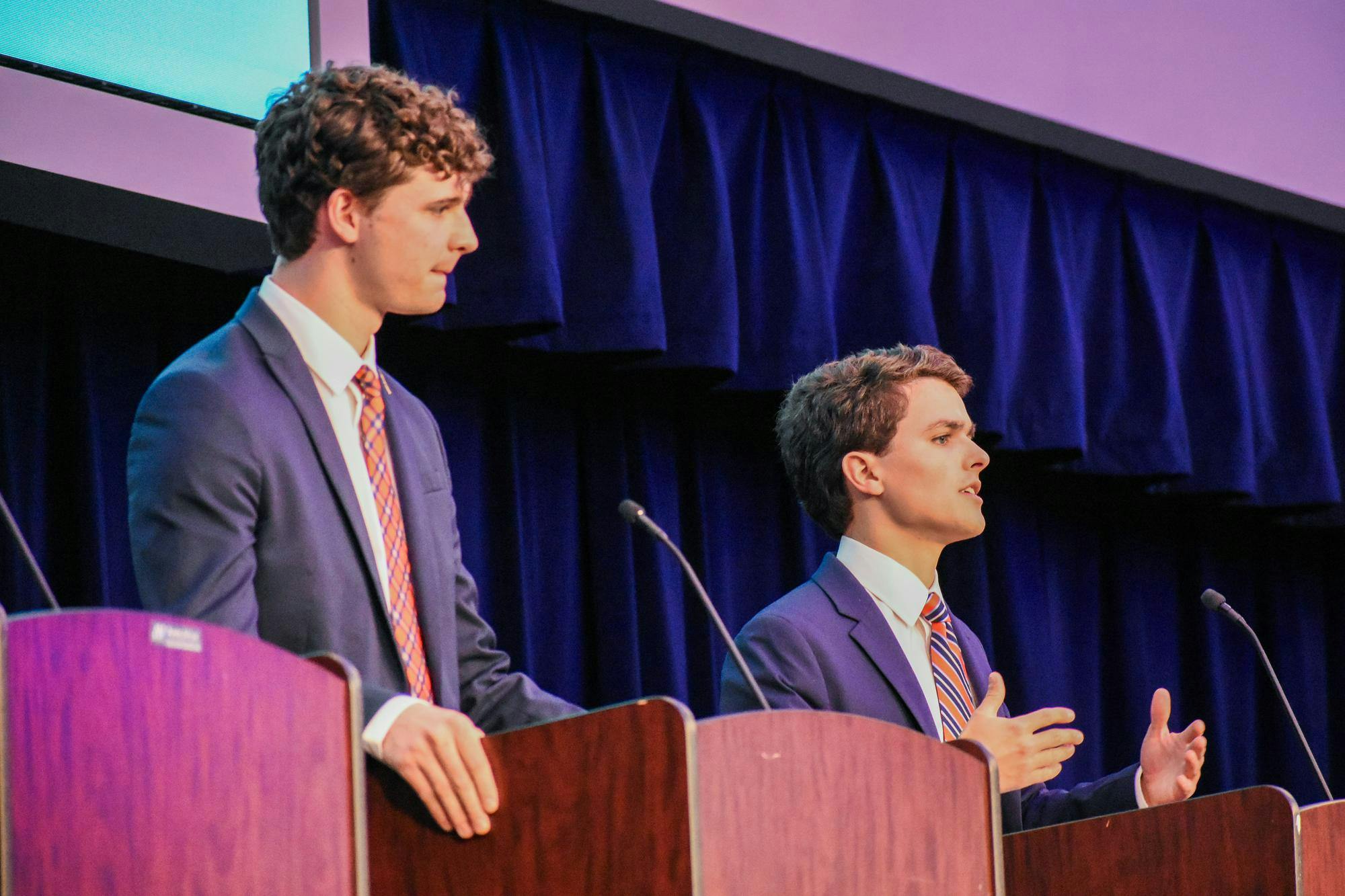
The two candidates for the President position of SGA, debate in Melton Student Center on Feb. 3, 2026.
In a response, Childress said parking was the biggest issue facing Auburn students, and wants to create a grace period for drop offs and advocate for different parking zones, like adding a separate one for the Recreation and Wellness Center. Childress also advocated for improving the interface of the ETA Spot App, which displays Tiger Transit bus routes.
Orr also emphasized parking concerns, but included housing concerns and class sizes too.
“The only way that, you know, we're really able to fix this problem immediately, right now, is to begin to cap enrollment. And I know that, you know, could be a harsh thing, but it's necessary,” Orr said. “We need to make this happen. The more students you have here, and you only have so much capacity to work with. And so if our capacity isn't fitting our enrollment numbers, we need to fix that. And that's a big part of my campaign.”
Childress and Orr were asked the question of if they were responsible for allocating a million dollars, what would be their most preferred project for the student body. Childress cited improvements to the Rec, such as adding a sauna, more fitness classes and improved technology, as well as expanding housing education. Orr said he, and other students, would like to see more Christmas lights on campus.
“I'm the Christmas guy. So that would definitely be part of that. I think tradition is one of the biggest things that Auburn has going for it. And, you know, why not build traditions? Why not build new traditions?” Orr said.
To end the debate, the candidates discussed their first three concrete plans, should they be elected. Orr is focused on choosing his team, outlining his team’s goals and making plans to take campaigning off of congested areas of campus like the Haley Concourse. Childress, who said his platform is structured like a to-do list, wants to focus on transforming the ETA Spot App, improving parking and fulfilling its campaign promises with the Rec and housing.
Kathryn Turner, SGA executive director of elections, closed the debate with reminders about voting. Voting will take place online at http://aub.ie/sgavote on Friday, Feb. 6 from 7 a.m. to 3 p.m. Election results will be announced during callouts at Cater Hall on Friday, Feb. 6 at 7 p.m.
Do you like this story? The Plainsman doesn't accept money from tuition or student fees, and we don't charge a subscription fee. But you can donate to support The Plainsman.
Jennifer Santiago, junior in political science and history, has been with The Auburn Plainsman since Fall 2024. Santiago previously served as a News Writer, Lifestyle Editor and Newsletter Editor. She is currently serving as the Content Editor.