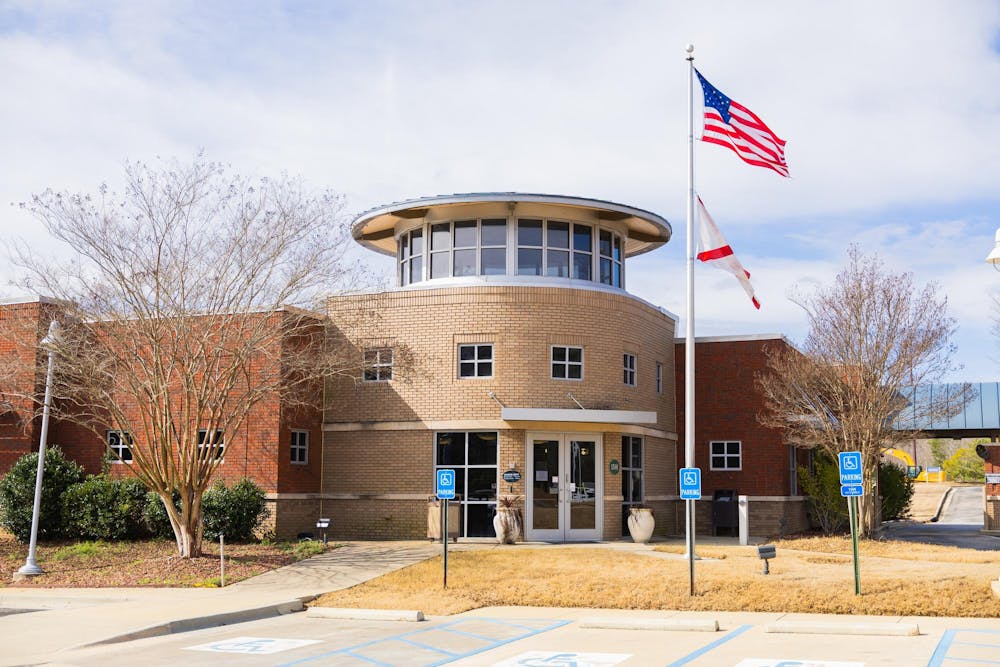
Effective Feb. 9, the Water Works Board of the City of Auburn has placed the city under a Phase 1 Drought Watch. The announcement stems from an agreement with the City of Auburn Drought Management Plan.
A Phase 1 Drought Watch is a voluntary request for businesses and residents to make an effort to reduce unnecessary water usage in order to protect long-term water supplies. Drought warnings are issued by the National Weather Service and the storm prediction center using rainfall that an area typically receives.
According to a press release, Auburn possesses ample water resources for emergency and public health purposes, but city officials encourage residents to practice effective conservation measures in order to prevent excessive water use.
Experts say that ways to practice safe water use include, but are not limited to:
- Reducing irrigation frequency or considering watering at efficient times of the day to prevent evaporation due to heat and wind (after 8:00 p.m. and before 8:00 a.m.). Checking your sprinkler timer and make adjustments as needed.
- Checking sprinkler heads and adjusting them as needed to keep water on your lawn, trees and shrubs and keep water off streets, driveways and sidewalks.
- Checking your sprinkler system for leaks and making repairs in a timely manner to minimize water losses.
- Not leaving manual sprinklers or running hoses unattended. If watering manually, using a kitchen timer to remind you to turn off the water.
- Postponing washing houses or paved surfaces unless for public health or safety reasons.
- Taking shorter showers.
- Not letting the water run while brushing your teeth, washing your face or washing dishes by hand.
- Only running full loads of laundry or dishes.
Tim Johnson, principal utility engineer for City of Auburn under the Water Resource Management Department, explained that Auburn’s drought watch is a result of months of record-low rainfall.
“Starting in September, we’ve now had five consecutive months with below average rainfall,” Johnson said.
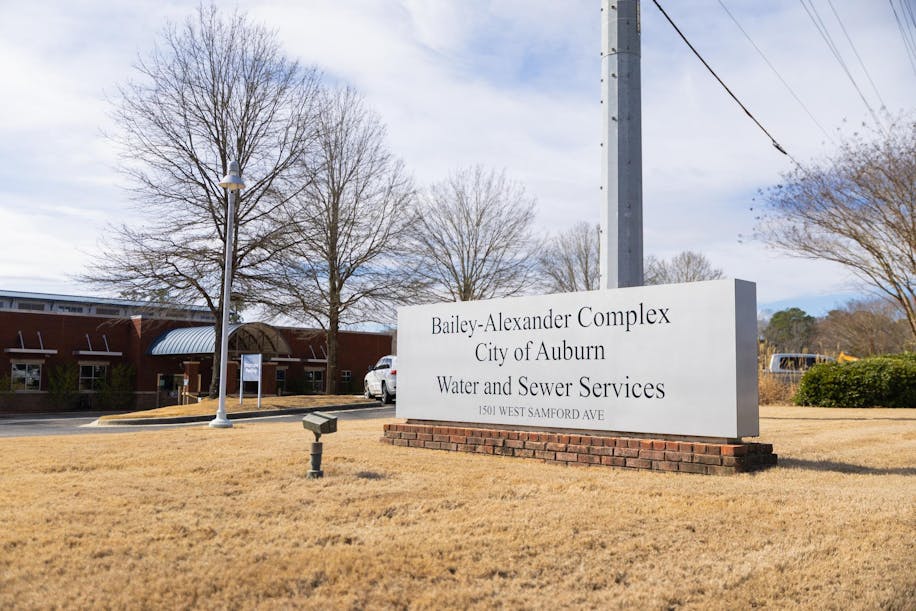
The Auburn City Water Works Building. Photo taken Feb. 17, 2026.
Precipitation levels are monitored using rainfall gauges across the city, including a weather station at the Auburn airport. These records go back to the mid-1960s, according to Johnson, and can signify drastic changes in rainfall.
“When you combine November and December, if you look at all of our records, November and December of last year were the driest November and December on record,” Johnson said.
Johnson explained that the lack of rainfall is unusual, with December typically being one of the wettest months of the year for Auburn according to data from the past 10 years.
However, residents shouldn't expect the conditions to worsen, with rain forecasted this weekend. Ashley Gann, public information officer for the Office of Institutional Compliance and Security, does not expect conditions to worsen into a Phase 2 Drought Warning, which would include mandatory restrictions on water use.
“As far as droughts go, we will generally see enough rain here in the coming weeks that will help restore most of our water table and also not have a prolonged impact on agriculture,” Gann said.
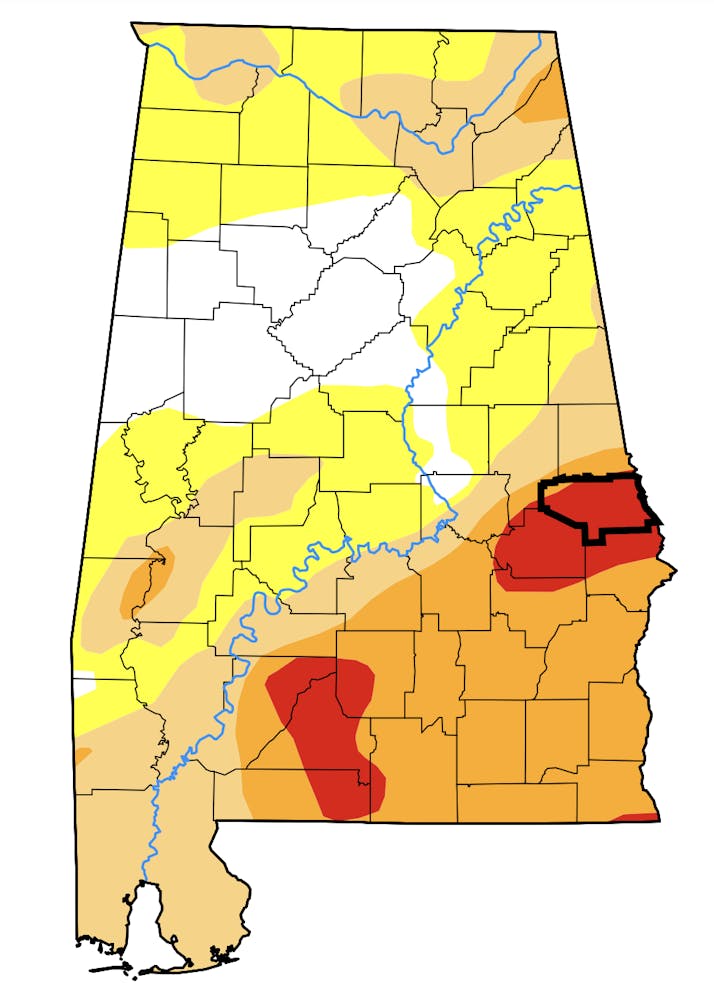
A map created by the U.S. Drought Monitor as of Feb. 12, 2026. Lee County is outlined in black, and is currently listed as a D3 (Extreme Drought)
Gann mentioned that weather like this is not completely out of character for Auburn, and due to colder and drier months, decreased rain is expected. However, Gann says that as the city moves into late February and March, residents can expect drought conditions to improve.
According to Gann, Auburn University has made efforts to lean into energy conservation strategies, including automatic lights in classrooms. For students living on campus who want to conserve water, Gann mentions ways to contribute.
“I would say simple things like turning off the water while you’re brushing your teeth, only using the amount of water you need while washing your hands, so making sure that you’re just following those best practices,” Gann said. “I would even say things that we remembered growing up learning in our childhood because if you multiply out a very small amount of personal use over all of the people in Auburn or at the University, it has a compounding effect.”
For those interested in learning more about the Phase 1 Drought Watch or how to practice safe water conservation, Johnson recommends that residents visit the official City of Auburn website.
Do you like this story? The Plainsman doesn't accept money from tuition or student fees, and we don't charge a subscription fee. But you can donate to support The Plainsman.

Amanda Machamer, senior in journalism, has been with The Auburn Plainsman since Spring 2025. Machamer previously served as a News Writer, Assistant News Editor and Assistant Content Editor. She is currently serving as the Editor-in-Chief.