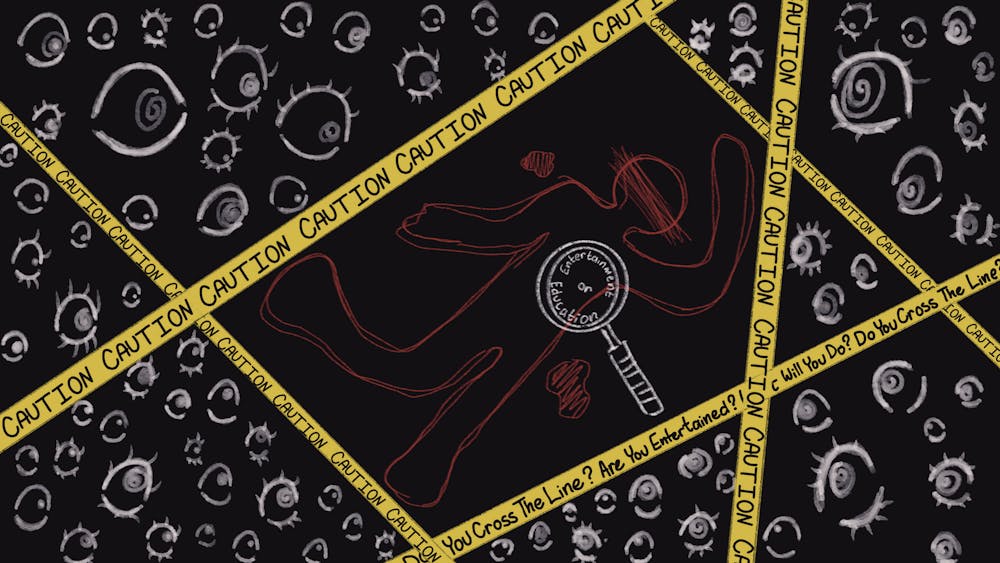
If anyone today were to browse the contents of any news, streaming or podcast platform, it would not be long until some form of true crime media appeared.
In our daily lives, we are undeniably surrounded by crime, and know or even experience detrimental effects that these can have. Witnessing the tragedies that happen to friends, family, neighbors and even ourselves is painful. It’s obvious to all of us that horrific crimes and the trauma related to them are nothing to take lightly.
So why, then, can we not get enough?
We, as a society, have come to a collective standstill with true crime media. Consumers press for more, ingesting story after story, but at what point does this demand breach into ethical problems?
Now, don’t get me wrong, seeing a crime unfold and watching the killer get caught, as all of the intricate details come together, is satisfying. Seeing justice being served in our complicated world is refreshing.
However, I’ve noticed a toxic relationship between these consumers and their attitude towards victims and survivors.
Retraumatizing survivors and their families is a real—and honestly highly likely—possibility, but so many of us willingly overlook that in search of the next “thrilling” podcast to listen to on a long drive. These behaviors create an unhealthy relationship of turning victims into characters and criminals into victims.
We see a major example of turning these real stories into story lines in Netflix’s heavily criticized “Monster: The Jeffrey Dahmer Story.” This dramatization of the horrendous serial killer horrified many viewers by its humanization of Dahmer. Yet, the most disturbing fact is that none of the victims' families were involved or supported its production.
The critique of Dahmer drama is just the tip of the iceberg. One can only begin to imagine how many stories have been taken away from families or put into podcasts without any concern for their potential harm.
That, in itself, is a serious problem, but people trying to understand or even sympathize with murderers and their actions is an even bigger problem. In the attempt to understand the stories of the people who experienced tragedies, we instead turn to the captivating content of killers.
As the line between true crime and entertainment blurs, our media remains unchecked simply because we are all too engrossed to take a step back, even going so far as to push our opinions on active investigations.
A relevant example of this is the massively publicized University of Idaho murders in late 2022. The death of Kaylee Goncalves, Madison Mogen, Ethan Chapin and Xana Kernodle reached every corner of the U.S., with everyone calling for justice be served.
This in itself is routine; a crime is publicized, and people want it to be solved. No harm is done by people wanting to see justice served for these families and victims. The issue? People took it a step too far.
Every corner of the internet had theories of who the killer was. Some users even argued that even friends of the victims were to blame only days after their murders were publicized. These individuals did not know these parties but ruined reputations just because certain podcasts or forums suggested their names.
Intentionally ignoring these atrocities is also not the appropriate answer. Media already complicates the narrative, with its selective coverage of what cases to publicize. Missing White Women Syndrome (MWWS) is a common true crime critique that emphasizes how missing white women often receive more media coverage than their male or people of color counterparts. This is only one example of how many news and media outlets pick the stories that might boost their rating most, despite the negative impact on other victims.
Fortunately, podcasts and YouTube videos can somewhat combat this, as more stories can be given attention on these platforms. Creators can choose to discuss cases that intrigue them or smaller cases that are ignored.
Of course, issues also arise with this method, as creators aren’t held to the same accountability as multi-billion dollar news corporations. If a creator wants to create a video where they discuss their thoughts on who the killer is and spread false information, who is to stop them?
We ignore these realities and experiences, but we rarely admit it.
However, I will reassure that not every true crime documentary or podcast is actively damaging. Some have even helped increase interest in cases that were once cold or given people a platform to share their stories.
Also, no one is a bad person, because they like learning about these stories.
Yet, being mindful of intentions is important.
I urge you to check what you are consuming and think about whether that podcast you are listening to is raising true awareness or committing active harm to the victims and families who suffered real pain from these incidents.
True crime is here to stay, but it's our responsibility to make more of an effort to ensure that our consumption is not doing more harm than good.
Ultimately, if we continue to remain ignorant of the harm true crime content can do, true crime as a genre will never get better. I urge us all to check what we are consuming and choose sources we know aren't harmful.
So maybe the next time you're on that long drive and change to that podcast, pay attention to the intentions of the creators you’re supporting, because at the end of the day, you, as the consumer, decide what true crime media can get away with.
Do you like this story? The Plainsman doesn't accept money from tuition or student fees, and we don't charge a subscription fee. But you can donate to support The Plainsman.