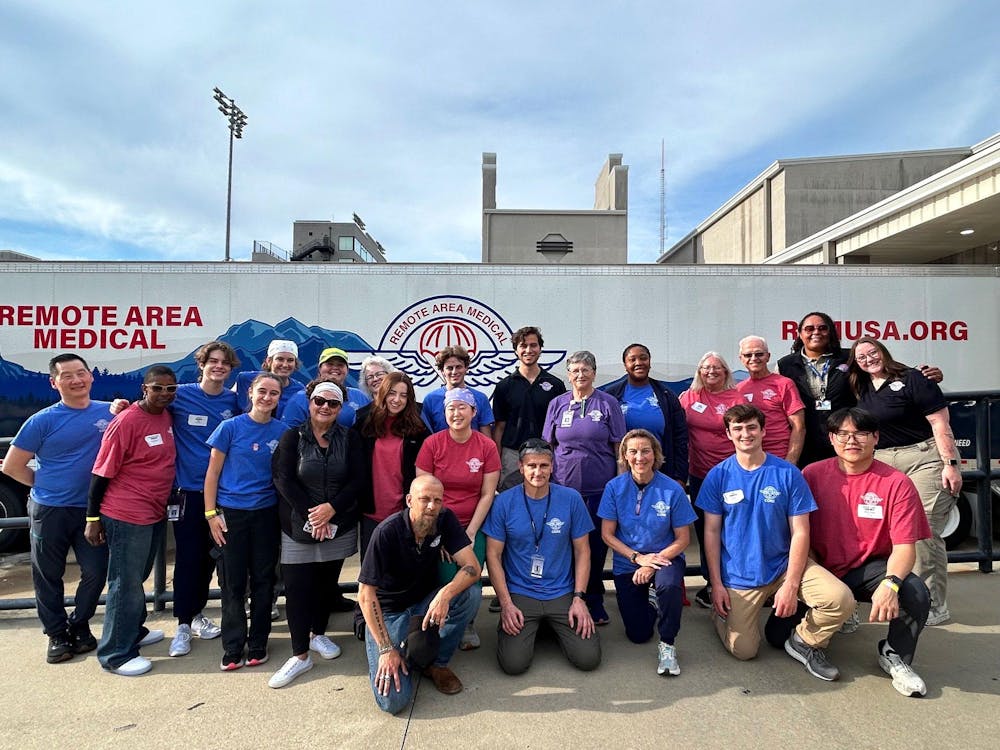
Remote Area Medical, or RAM, is a privately-funded nonprofit committed to providing access to medical treatment in areas where healthcare resources are limited. To accomplish this, RAM hosts pop-up and telehealth clinics across the country. From April 25 to 26, RAM came to Montgomery, Alabama, for an in-person pop up at the Multiplex at Cramton Bowl.
The clinic offered a variety of services, including medical, dental and vision care. People of all ages that were in need of medical care were able to see medical professionals on a first-come, first-serve basis. All patients received care free of charge and didn't have to provide any kind of identification.
According to their website, RAM has provided access to care across the nation since 1985. Since its conception, RAM has served over a million patients, worked with over 200,000 volunteers and provided over $230 million in healthcare services nationwide.
David Morales, a clinic coordinator for RAM, described how Stan Brock, a philanthropist best known for his nature show, "Mutual of Omaha's Wild Kingdom," founded Remote Area Medical.
"He was the guy that wrestled the animals, but before that, he worked on a cattle farm in Guyana — very remote, and obviously access to medical care was not something that really existed there," Morales said. "When he left the show, he promised he'd be back to help make some of these remote areas accessible to healthcare."
With that mission, RAM began mostly operating internationally, but has focused more on providing care within the United States as the need for healthcare has grown.
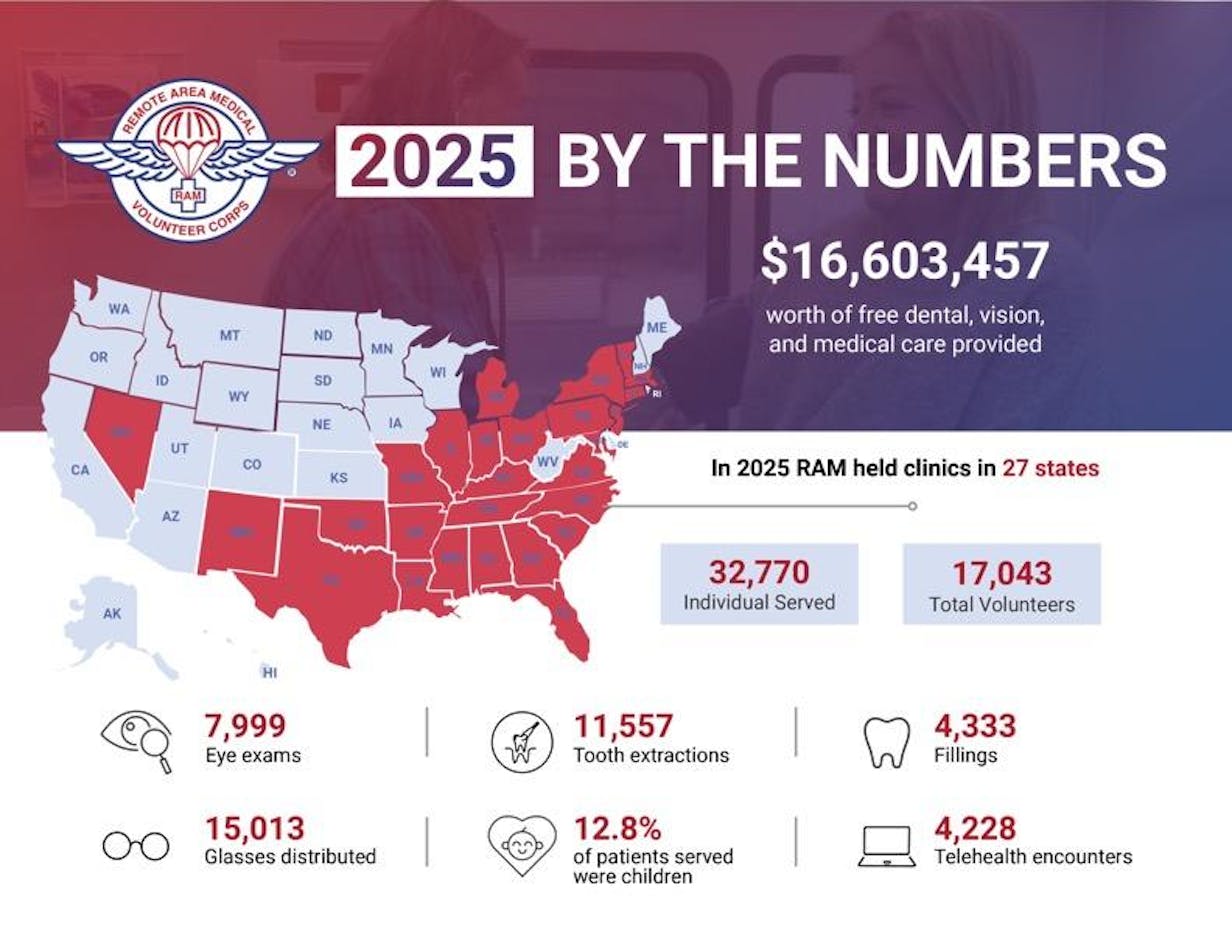
Remote Area Medical created an impact report to show the reach they've had in the U.S. in 2025, alone. | Photo Contributed by Remote Area Medical
Morales said the impact of RAM stretches across the entire country, including from Miama to Alaska.
RAM works with any group that requests a clinic to find volunteers, medical professionals and space for in-person clinics. In more recent years, it has also began utilizing telehealth for clinics, recognizing that not everyone can make it for in-person pop up clinics.
For its Montgomery clinic, RAM had 395 volunteers providing a variety of services for patients.
RAM generally provides dental, vision and medical treatment at its clinics, although services sometimes vary depending on the availability of medical providers that can offer follow up care.
Since dental and vision care tend to be the most sought after, patients coming to the clinic have to choose which one they need most, and can be added to the queue for the other after if availability and time allows. General medical care is provided for all visitors to the clinics.
A more detailed explanation for what patients and volunteers can expect at the clinics can be found on RAM's YouTube channel.
According to Morales and RAM's website, dental care provided at the clinics includes, cleanings, fillings and extractions. Since RAM owns medical equipment, it is even able to provide comprehensive dental x-rays on-site. RAM also has a team that can make dentures on-site, although that team was unable to attend the pop up in Montgomery.
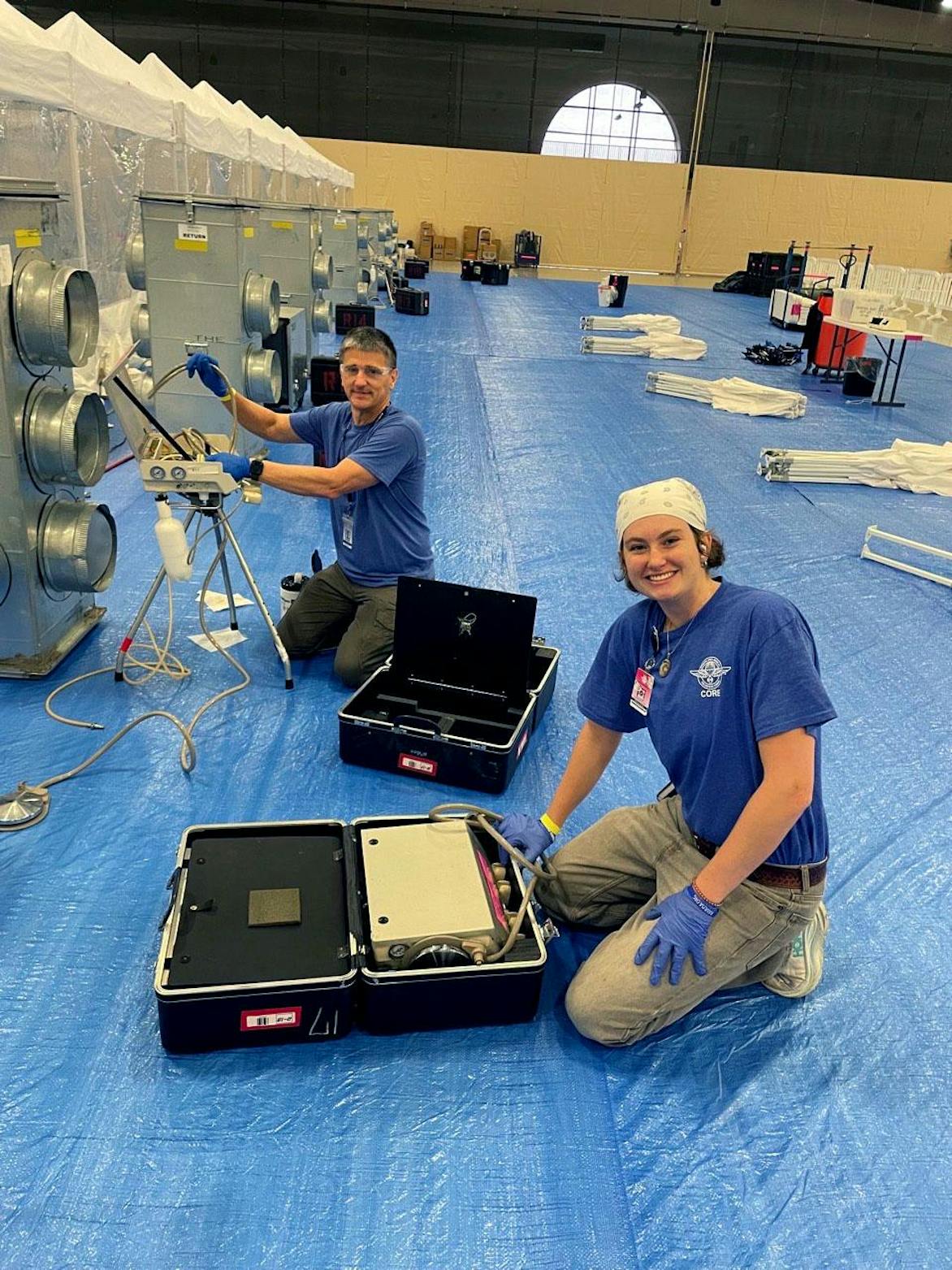
Volunteers set up Remote Area Medical's equipment for the free healthcare clinic in Montgomery. | Photo Contributed by Allison McCauley-Cook
For vision care, RAM is able to perform comprehensive eye exams where patients can receive a prescription for glasses, as well as have their general eye health checked out.
According to Morales, RAM also has a dedicated eye glass section, where guests can choose frames and have lenses cut on-site in a converted truck known as "The Eye Lab." In Montgomery, RAM made 167 pairs of glasses for patients.
Since medical care can be more complicated, services are available based on whether guests can receive follow up care in the area without needing medical insurance.
Morales said medical care though RAM is the most extensive, although not everything can be provided for at the clinics.
"We do general health exams. We do women's health. We do a decent amount of Podiatry, some dermatology — basically, it's any kind of medical thing you can get a follow-up resource for," Morales said. "Obviously, some resources are difficult to have follow-up care with those requirements, like Oncology is a hard one. Cardiology is a hard one — stuff like that."
RAM is able to write prescriptions, but it is unable to fill them on-site, so patients are provided with a list of local, low-cost pharmacies
Over the weekend in Montgomery, RAM saw 471 patients in total. 241 of those patients saw dental providers, 212 patients received vision care and 247 individuals utilized medical care resources.
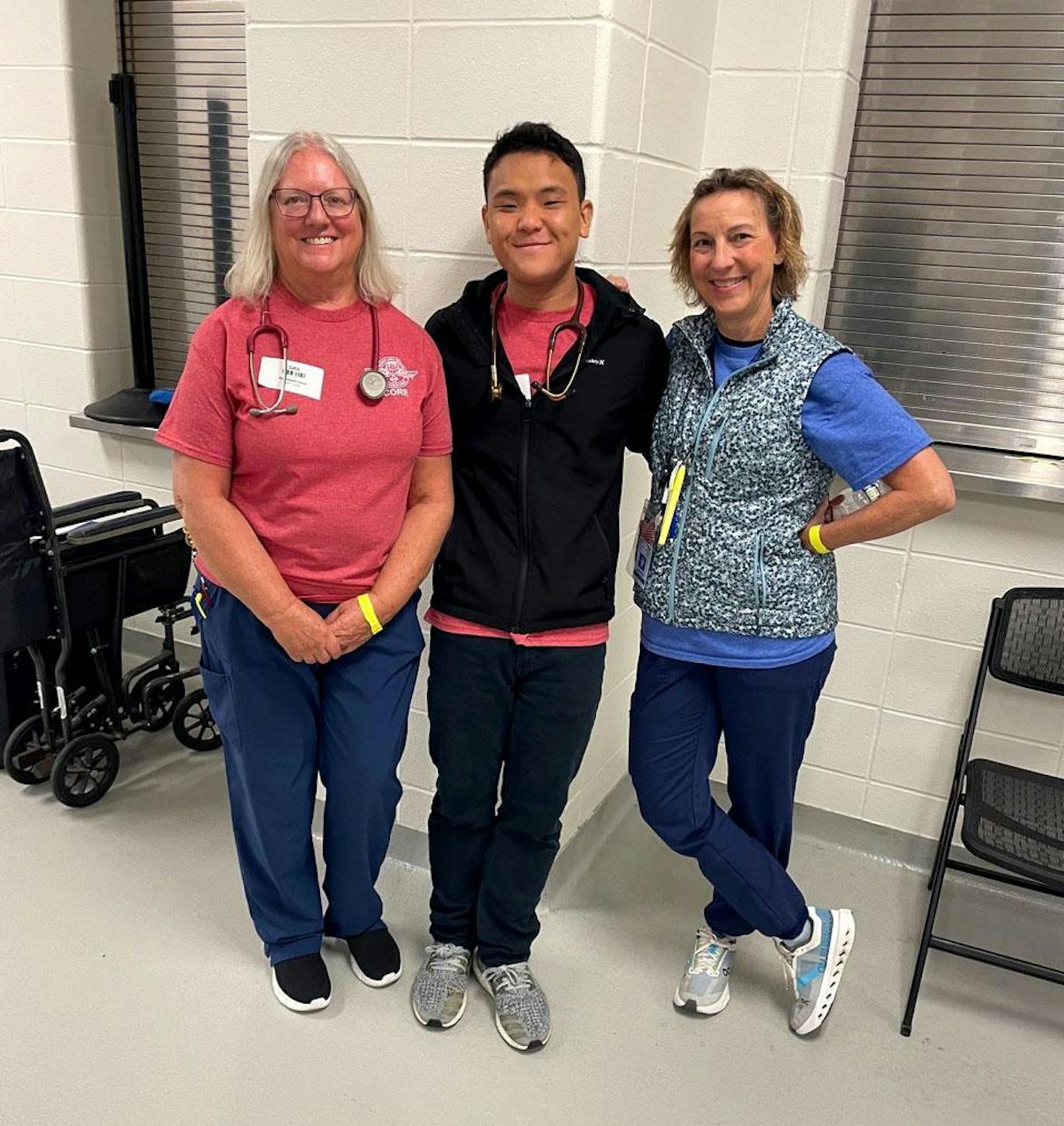
Since the clinics provide so many services, big spaces are necessary. Within those spaces, pop up tents as well as pip-and-drape rooms are used for medical and dental services to ensure patient privacy. RAM also includes an entire area just for sterilization with a team solely dedicated to sanitizing tools and patient treatment areas.
"We always think about the patient experience and know that the patients that are coming have had a hard time, and we're just trying to make it as welcoming and comforting as possible," Morales said.
RAM provides these clinics without the use of any government funds, so it relies on the charity of others, mostly through grants and donations.
For those interested in volunteering or donating, visit RAM's website here. Students can join Auburn University's RAM chapter, which assisted at the Montgomery clinic.
Upcoming clinics can be found through RAM's website and social media accounts, including Instagram and Facebook.
Do you like this story? The Plainsman doesn't accept money from tuition or student fees, and we don't charge a subscription fee. But you can donate to support The Plainsman.