Since track star Snitz Snider participated in the 1928 Olympic Games in Amsterdam, Netherlands Auburn University has seen more than 100 of its former athletes become Olympians.
And thanks to the efforts of those Olympians and the school of kinesiology, Auburn has a chance to become the home of dozens of first-time Olympic participants at the 2016 Olympics in Rio de Janeiro, Brazil.
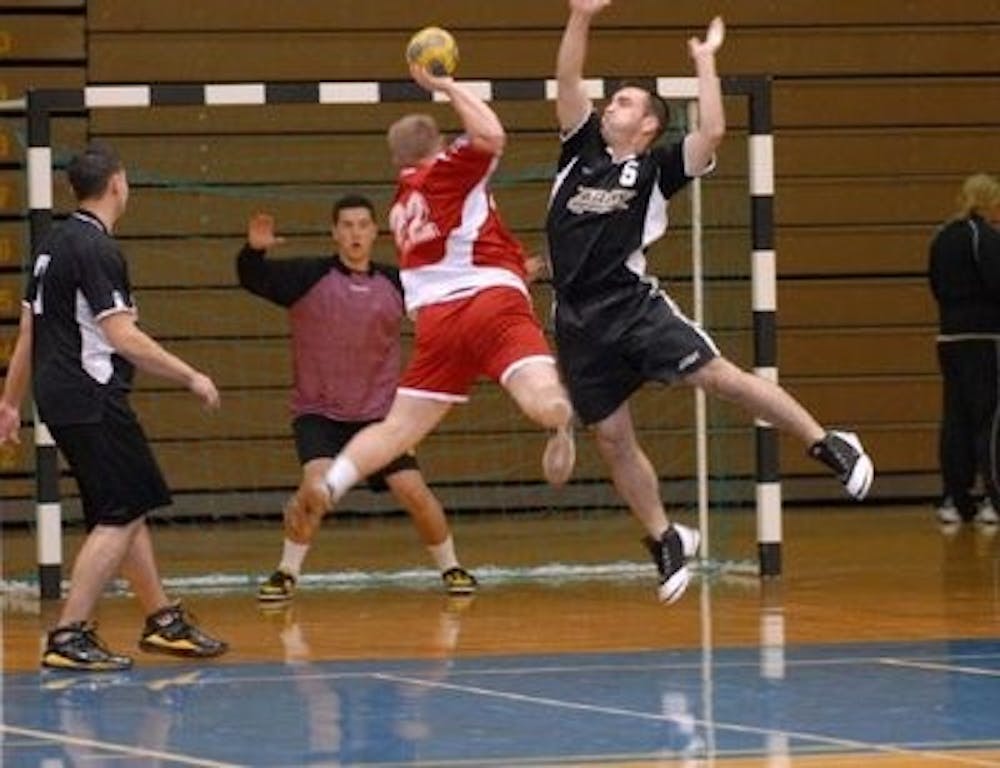
Representatives from USA Team Handball will visit The Plains July 12-13 to see if the University could become the new residency program for the United States' national handball teams.
The residency bid, led by former Auburn Tiger and handball Olympian Reita Clanton, could make Auburn the new home for Olympic team handball in the U.S.
"Essentially what they need is a gym to train in, adequate housing for their athletes and opportunities for their athletes to work or continue their education," Clanton said. "Auburn has all of these things and more. We have the infrastructure for support services like athletic training and strength and conditioning. Through the school of kinesiology and the Performance Optimization Center, we have possibilities to collaborate with the team and provide them new opportunities."
One of those new Olympians living and training in Auburn could be a current University student.
As part of USA Team Handball's visit, there will be an open tryout for the men's training squad for the 2016 Olympics in Brazil.
Participants will be evaluated on ball handling skills, throwing ability, physical abilities and teamwork.
Since team handball is a relatively unknown sport in the United States--no American national team has qualified since the 1996 Games in Atlanta--no experience with the sport is required to tryout.
"(The national team coaches) are always looking for great athletes," Clanton said. "Team handball combines all these skills we use in American sports--running, jumping, throwing and catching--so it could be something a really great athlete out there could play well. There might be some young people here that have what it takes to train with the national team."
Clanton, the director of the new Performance Optimization Center, would know what it takes to be a member of the national team. A native of nearby Lafayette, Clanton was one of the first multi-sport athletes in Auburn's budding women's athletics program.
After playing and coaching women's basketball, volleyball and softball at Auburn, Clanton received a letter from the United States Olympic Committee asking her to try out for the country's newly formed team handball program.
"I had no idea what team handball was--I thought I was going to go whack the little ball up against the wall," Clanton said with a chuckle. "When I got to Iowa State University and saw the sport for the first time, I was like, 'This is a gift from heaven!' It was all of my favorite sports rolled into one."
Despite missing out on the 1976 Olympics in Montreal and the 1980 Olympics in Moscow, Clanton and her teammates qualified for the 1984 Olympics in Los Angeles. At those Games, the United States women's handball team placed fourth in a campaign that included an opening-round upset of No. 1-ranked China.
Clanton went on to coach the national team at the 1996 Olympics in Atlanta, just 100 miles from her hometown. After her coaching days were over, Clanton continued her close ties to the program, which led to Auburn's bid for the residency program.
"One of my former coaches, Javier Garcia Cuesta, called me back in late April to tell me he was back in the States and that he had taken the men's national team coaching job," Clanton said. "We were just chatting, and I asked him where the national team was now. He said they were kind of in limbo at that point, and they were looking for a residency program for their men's and women's national teams."
Clanton said her wheels started turning when Cuesta, who will be at the open tryout July 13, described the places the national team was looking at for the residency program. While he named off places such as Boston, Los Angeles and Colorado Springs, Clanton decided to throw Auburn's name into the hat.
"Auburn can offer just as much more than a regular training center because we are a university," Clanton said. "We have one of the top schools of kinesiology in the country and we have a Performance Optimization Center. We have cutting edge research, expert skills and emerging technology to help the national teams with performance enhancement."
Clanton went over the plan with Mary Rudisill and David Pascoe, the head and assistant head of the school of kinesiology. They and the rest of the school thought the bid would be great for Auburn, and a date was set.
During the visit, USA Team Handball will outline their vision for the national team in 2013 and beyond. Clanton believes Auburn could play a huge role in the future success of the program.
"I've always said that handball doesn't have to be a major sport in the United States in order to be successful," Clanton said. "It could be just a regional sport because we have enough good athletes around that if we built a culture of team handball here in the Southeast, we could gain an international level of competitive excellence.
"A residency program here in Auburn would be great for the game at the national team level and at a grassroots level. It's all about building awareness and developing that culture."
Do you like this story? The Plainsman doesn't accept money from tuition or student fees, and we don't charge a subscription fee. But you can donate to support The Plainsman.