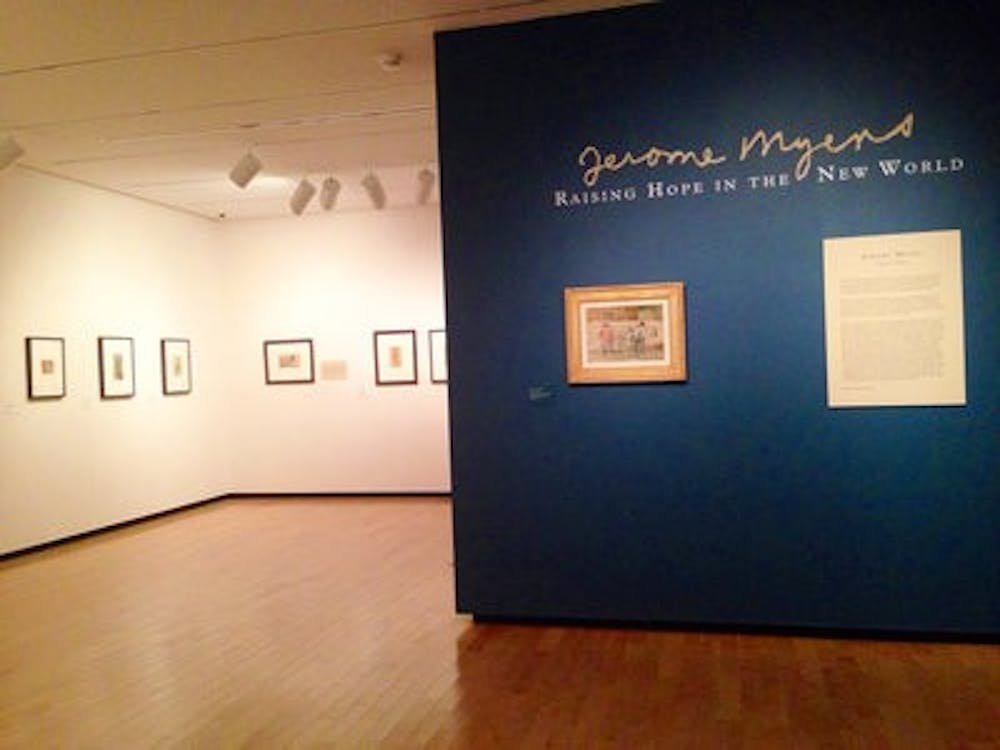
A new exhibit, "Jerome Myers: Raising Hope in the New World," opened on Feb. 8 at Auburn University's Jule Collins Smith Museum of Fine Art.
The exhibit will feature drawings, prints and paintings by Jerome Myers, an artist known for his romantic depictions of urban landscapes in the early 20th century.
Marilyn Laufer is the director of Jule Collins Smith Museum of Fine Art.
"The most important thing about this exhibition is [that] we are introducing an artist that has been historically underrated," Laufer said. "Students, at first, might think it is kind of old fashioned because all of the artwork [was] done before 1940. If they spend some time with it, though, I think they will see his skill as an artist. I hope they will start to see that the subject matter is a very interesting way of looking at the people who lived in the early 20th century."
Myers spent most of his life in New York City's Lower East Side. He was inspired by the huge influx of immigrants New York experienced during his lifetime.
"All my life, I had lived, worked and played in the poorest streets of American cities," Myers said in 1923. "I knew them and their population and was one of them. Others saw ugliness and degradation there. I saw poetry and beauty, so I came back to them."
Despite his unique style and subject matter, Myers never achieved the level of fame many of his contemporaries did.
Stephanie Baacke, freshman in pre-nursing, is taking her first art history class this semester.
Baacke said she does not know much about Myers' work, but she said she is still interested in the exhibit.
"I had never heard of Jerome Myers before, but I saw some of his paintings, and I think they are really beautiful," Baacke said. "I think it's really cool that Auburn University has access to such a large collection of his artwork."
The exhibit focuses on Myers' portrayal of children in his art.
Alison Warth, freshman in art history, said youthfulness is an important theme in much of Myers' artwork.
"His work seems to focus on the positive and lightheartedness of children and the working class in New York during his lifetime," Warth said. "He used media that a child would use, and he used it to emphasize the childlike wonder and playfulness that he tries to capture in his work."
According to Warth, Myers' art is meant to leave an impression on its viewers.
"The nostalgic undertone within his artwork reminds its audience of the harsh reality that nothing lasts, and should be enjoyed in the moment," Warth said.
Do you like this story? The Plainsman doesn't accept money from tuition or student fees, and we don't charge a subscription fee. But you can donate to support The Plainsman.