Skip to Content, Navigation, or Footer.
A spirit that is not afraid

Columns

Three simple black figures of people stand side by side against a soft, gray background.

COLUMN | People are not concepts

The great atrocities of human history have been enabled by dehumanization, that is, by veiling individuals behind lifeless concepts. At the heart of every issue, there are people. Before we make any decisions, before we come to any conclusions, we must acknowledge this fact. 


A shadowy figure in a suit controls several smaller puppet-like figures, connected by strings, with computer and phone screen capturing the figure with the tie on the sides.

COLUMN | Look beyond the border

A common course of action when trying to punish a country's government results in the death of innocent civilians. While propaganda is pushed down our throat that these actions are for the good of the people, tell that to the parents who must dig their children’s limbs from the rubble of concrete. It is extremely immoral and unfair to punish citizens of a country through war and destruction because of their country's political actions. It’s incredibly important to understand the difference between a country's government and its citizens. The quarrels of world leaders over ruling power should not represent the people of their population.


A group of ten young women smiles together outdoors, wearing jackets and fitting leggings, in front of a brick building.

COLUMN | A campaign culture

Involvement is popular and cool, even, which is a rarity. So how did it get like this? What makes Auburn different? SGA in Auburn has real power. The people in office do really matter, and can really make a change. This, in turn, encourages voters to feel like their votes and support make a difference too. Students want their voices to matter, and the voices they put in office can make huge differences.

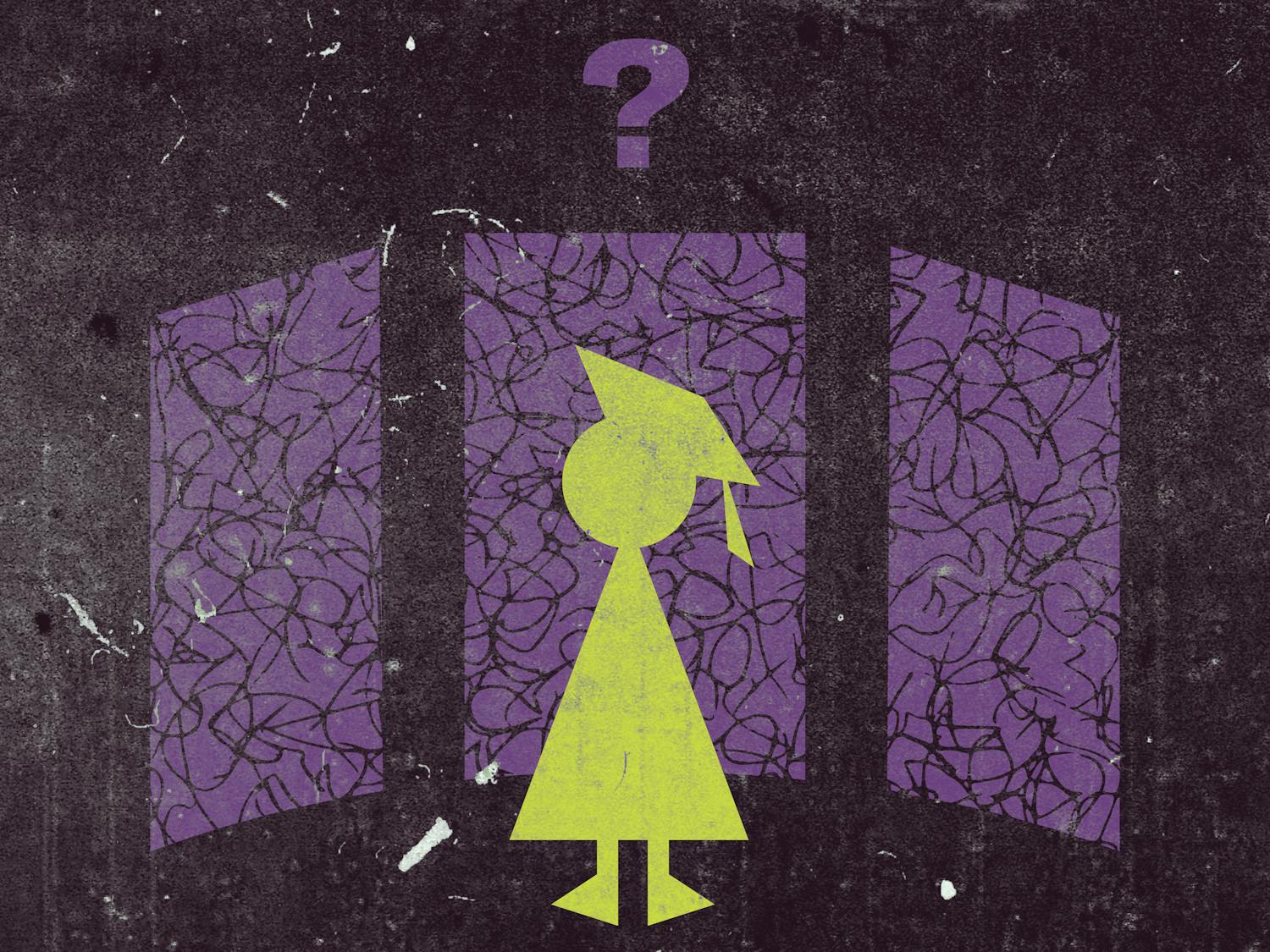
A yellow figure wearing a graduation cap stands between two purple panels, with a question mark above.

COLUMN | The changing purpose of higher education

Last year, Alabama passed the Alabama Act 2024-34 (SB 129), which bans not only DEI initiatives, but also "divisive concepts." The majority of these concepts concern race and sexuality in public education, including universities. Will universities continue to push for diversity of thought and method, or will education become an extension of the political climate of our country?

Three figs, with one cut open, rest on green leaves against a blue and yellow background.

COLUMN | Let some figs rot

Lately, my social media algorithm has been circling back to Sylvia Plath’s “The Bell Jar,” specifically her famous poem “The Fig Tree.” In the poem, Plath expands upon the seemingly endless choices in life — and how, with each decision, your path becomes more focused and equally more limited. These decisions can feel paralyzing, but I encourage you to read the poem and take its message to heart. Your future self will thank you if you let some figs rot.

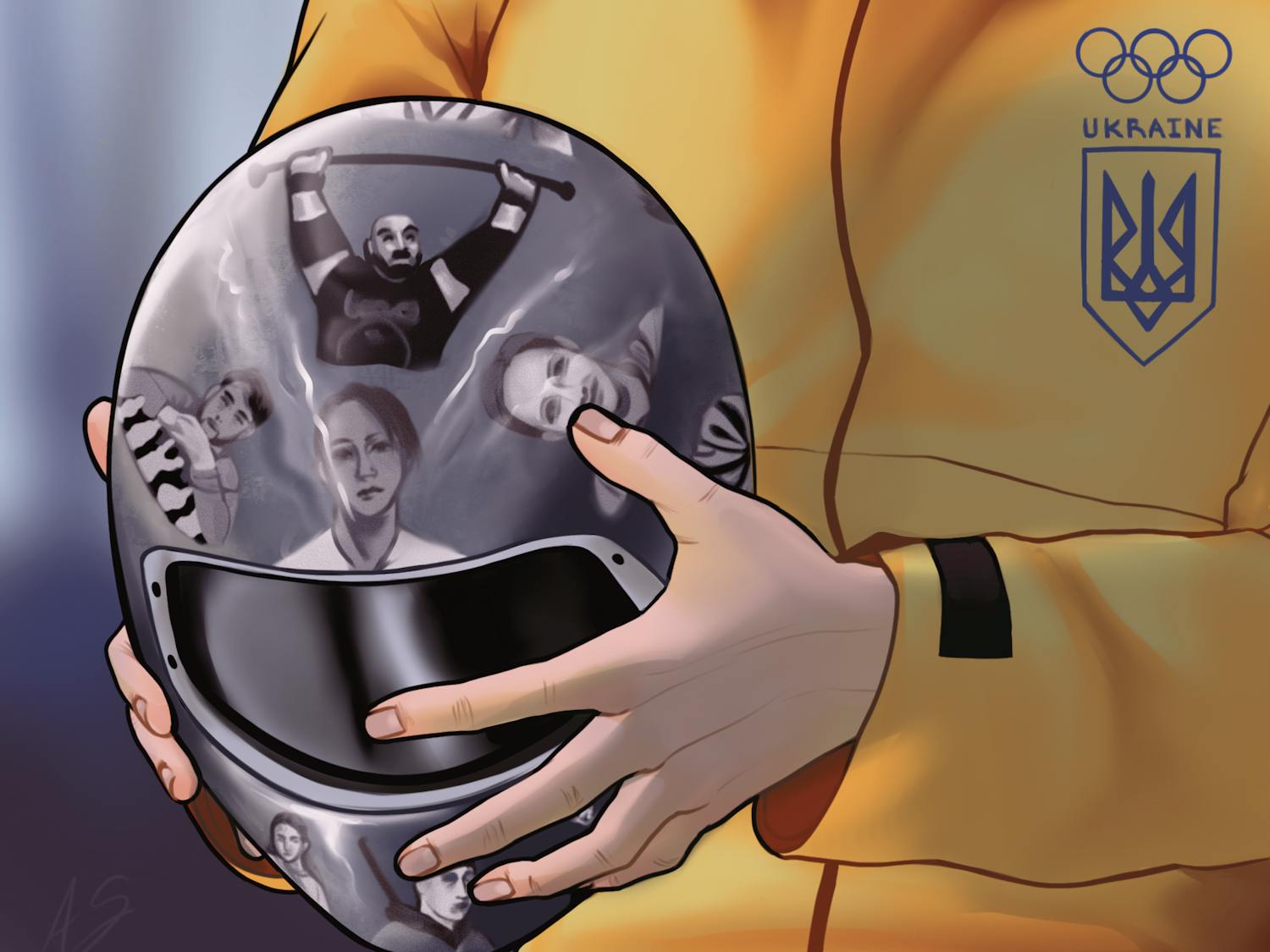
A person in a yellow jacket holds a black helmet featuring various portraits and the Ukrainian Olympic emblem.

COLUMN | Winter Olympics and selective neutrality

Amid the humorous incidents and competitive fun of this year's Winter Olympics, something more serious was going on in men's skeleton. Vladyslav Heraskevych, a skeleton athlete representing Ukraine, was disqualified after wanting to race in a helmet honoring 24 Ukrainian athletes and citizens who had died from the war with Russia. Even with the attention on Heraskevych this year not coming from a gold medal, his message lives past the competition.

A wall displays a mix of photographs, graphics, and a quote celebrating Auburn University and its community spirit.

COLUMN | The Creed speaks for itself

The Auburn University Creed was published by the Auburn Plainsman on Jan. 21, 1944, around two months after George Petrie finished writing it. The originally published issue was brief: “We will not elaborate; the creed speaks for itself, powerfully.” The Creed's past and the people who carried it with them remain tremendously important to believing in Auburn and loving it. One such example is football coach Shug Jordan's role in one of the most strategic and costly assaults on the Axis occupation of Western Europe – and how he took Auburn with him.

A large ice cube with a human trapped inside with a sad face, next to a smaller ice cube with melted water underneath.

COLUMN | ICE threatens our human rights

Operating fully funded and government-backed, U.S. Immigrations and Customs Enforcement (ICE) is murdering American citizens, as well as detaining children and innocents in broad daylight. This goes beyond simple political affiliations. The divide between right and left is of no concern to ICE. Registered political party did not matter to them when killing Pretti or Good, not to mention their U.S. citizenship. Allegedly, this is of utmost importance to our government's administration.

A timeline bar with multiple spots labeled "NAME" are aligned along a horizontal line, with two orange apostrophes above.

COLUMN | The many names of Auburn University

Despite the University’s seemingly timeless charm, its many name changes illustrate a complex, frenetic history, which reveals just how young Auburn is in the context of its development. Nonetheless, when posterity looks back on history, it invariably finds that its ancestors tolerated — and often approved of — truly unconscionable behavior. Let us be the ones to set them right.

A black background features abstract eyeball designs, with a red outline of a person and yellow caution tape reading various phrases.

COLUMN | An ethical dilemma with true crime

If anyone today were to browse the contents of any news, streaming or podcast platform, it would not be long until some form of true crime media appeared. In our daily lives, we are undeniably surrounded by crime, and know or even experience detrimental effects that these can have. Witnessing the tragedies that happen to friends, family, neighbors and even ourselves is painful. It’s obvious to all of us that horrific crimes and the trauma related to them are nothing to take lightly. So why, then, can we not get enough?

Two girls in white dresses are joyfully holding hands while running through a grassy field with colorful flowers under a blue sky.

COLUMN | I, too, dream a world

The writing world of the past was full of political commentary, and in today's age, art and music have become a common avenue of political expression. However, while many have swapped typewriters for canvases and microphones, most have lost this in regular dialogue, claiming they're "not a political person." However, in a time of political uncertainty and unrest, we can always fall back on older texts. Langston Hughes' works, “I, Too” and “I Dream a World” both offer guidance on loving our fellow man. While I, myself, am not a poet, I undoubtedly will always have the courage to love my fellow man and accept we're all America.

A pink figure with a head down and a pencil in hand creates a stream of sparkles and colors extending outward.

COLUMN | Art as a coping mechanism

Let's try and find a moment where the chaos suffices and we can find the long lost peace of mind. Lauryn Hill spoke for all of us when she said she’s “gotta find peace of mind.” Where is the peace of mind? It’s seemingly nowhere. The chaos fills the lungs of world leaders and their spewing spit waters the soil of our moldable minds. Our minds expand with rage against the other side. That rage is oftentimes justified. What could help find peace of mind?

Auburn Plainsman senior, Ella Walton, poses in Ralph Brown Draughon library.

COLUMN | Wanted: The art of journalism, dead or alive?

Let me preface with: forgive me, Plainsman. I meant not what I said three years ago, on that rainy campus tour of Auburn. I don’t believe my 18-year-old self, who declared journalism’s time of death prematurely, could fathom the metaphorical home I’ve made for myself in journalism’s embrace. The art of journalism is alive in those that keep it so: in my fellow journalists, in each interviewee we come across, in our dear readers. To you all, I say, thank you for bringing a previously undiscovered part of me to life.

A girl sleeps on blackboards with a paint brush in her hand.

COLUMN | Memories make art meaningful

Memories are what make art meaningful. Being able to experience emotion is what makes art meaningful. Being able to open your eyes and breathe brisk autumn air this fall is what makes art meaningful. The world is constantly telling you what makes art meaningful subtly in everyone's day-to-day life.